Showing posts with label Pacific War. Show all posts

Saturday, November 13, 2021

374. Super cruisers and Beyond Burma


Link to Table of Contents


COVID and the Pacific War 


Day 522/67 = 8/21/21
The new cases curve has finally reversed. And pretty dramatically. Hospitalizations are still going up, but that’s to be expected. I’m actually thinking I may drop back to a single mask for the final Stern Grove concert.

But that’s not why I’m writing: I am still reviewing my old blog posts and came to another assessment of Japanese ship building decisions leading up to WW2. Drachinifel has also talked about this in a Drydock episode or three. Latest thought: what about a scaled up Tone class ship instead of the Yamatas? Not sure about the actual gun size, but there would be six grouped in three twin turrets with a small citadel. The rear would be AAA and float planes. The speed would be at least equal to the Kongos. The protection would be better than the Kongos. It would have torpedo tubes deep in the hull. It would be hard to argue for anything below 15”, but 16” would probably make it too large a ship. You probably couldn’t get double the ships, but you probably could have had three by the start of the war and maybe one or two more during the course of the war. 

Now that I think of it, if you really do this knowing what the war will be like, you could argue for going with a well protected 12” armed ship -- the ship the USN thought the Japanese were building and built the Alaska’s in response. So a ship between the Tone and the Kongo. Smaller but still powerful guns. Similar speed. Better protection. Full load of torpedoes. These ships would have been perfect for the Solomons and for carrier escort duty. And they would have saved fuel oil over the Kongos in those roles. So if a ship like this could have been built on 20,000 ton displacement, then you might well have had four of them by the end of 1942 and six by the end of 1943. Maybe.


Day 530/75 
The final Stern Grove Festival concert (Tower of Power) had to be cancelled after a burst water main flooded the venue bringing down some trees and doing extensive damage. They will be lucky to have everything repaired for the 2022 Festival season. I’m already signed up for a number of events in September, so this is not the end of my greening work, but it was significant as the resumption of my greening work after the unprecedented pandemic break, I was actually looking forward to that final concert. I’ve yet to work a full eight hour shift, but that’s coming up soon. We will see how I hold up. For the businesses' sake, I’m glad to see so many events are happening. Most of them have been up north and I haven’t worked them. I still think these gatherings are a little nuts, but at least it’s outdoors.

At the moment it looks like I could end up making about half my usual greening income this year, which would be nice. More than I expected to make this year.

Day 545/90
Now I feel bad about something beyond being slow to continue this blog. The neighborhood restaurant that contributed the most to making last year tolerable, was Beyond Burma. While their tea leaf salad was disappointing, everything else was excellent and I went there about once a month and picked up food for four or five meals. Post-vax, when I could move around more, I returned to my previous favorite Burmese restaurant (with the amazing tea leaf salad). I just walked past Beyond Burma and they are closed and the room emptied out. They had spent most of the pandemic redecorating. I just checked my records, and I hadn’t given them any business in five months. I didn’t even get a chance to say thanks, and goodbye.


Wednesday, July 24, 2019

337. Nimitz


Link to Table of Contents


Random

It is probably a good indication of how bored I am that I was kind of excited when our street sign started to fall off and I needed to repair it. It is, of course, an awkward job. The screw that has failed is at the full extension point of our extension ladder. So working on this means balancing a little higher than I’m entirely comfortable with. Thus, I am not repairing the stripped out screw hole the way I would if it were more accessible. I just bought a replacement screw -- the old one was so rusty it is obvious it hasn’t been in contact with the wood for decades. And I bought some plastic screw inserts that you screw in to fill the hole before screwing the new screw into the plastic. This should be reasonably easy to do at the top of our ladder. I even have my drill/driver charging at home to make this even easier. I'm hoping this paragraph will also serve as a “not-suicide” note in the event things go south.

We are now in the June lull of event greening season (I'm still way behind with my publishing) so I had breakfast at the Pork Store and learned that one of my favorite waitresses is moving to Dallas in July. At this point I can’t blame anyone for leaving SF, but it is unfortunate.


Someone on the Chronicle wrote something this week pointing out that the city -- and this means both the politicians and the people -- are willing to do anything to address the housing shortage so long as it doesn’t mean building new housing. That just about sums it up. And this goes nicely with our eagerness to solve the global warming problem so long as it doesn’t mean any change in lifestyle. The obesity situation also suggests itself here.


There’s also a political/sociological aspect to this. To change the world you have to have an unreasonable expectation that change is possible. I don’t believe people are currently willing to make things better. Perhaps it is better to be young and naive (or ignorant) than to see how bad the situation really is. 


If I knew more about Berthier, I would not be surprised to learn that at the beginning, before Napoleon first crossed the Alps into Italy, Berthier was pessimistic based on the very real difficulties of conducting a war on the far side of the Alps while the Royal Navy controlled the Med. I suspect Berthier both understood the difficulties and had reasonable ideas for how to overcome them. But you need a Napoleon who thinks unreasonable things are possible before anyone will attempt the thing. And yes, I’ve been thinking about the Waterloo campaign again and I’m even more convinced that Napoleon could have pulled it off if his army had moved the way it always had when Berthier was his Chief of Staff. Hypotheticals in history are never a sure thing, but this one is relatively easy when you consider how close run the real history was. 


Biography of Nimitz

This is a book I read a long time ago and own a copy of. I’ve been thinking that it was a great introduction to the USN both leading up to and during the Pacific War. Like a one book guide to the USN in the Pacific War. But, as I said, it had been a long time since I’d read it, so I thought I should give it another read to confirm this. There’s a lot I had remembered but some details I had forgotten. I just ran into one which inspired me to write this.

P164 “In June 1936 Chet [Chester Nimitz’s only son] was graduated from the Naval Academy and, after a period of leave, went to sea in the cruiser Indianapolis...” There’s nothing unusual about this except that the Indianapolis was Spruance’s flagship for much of the time he commanded 5th Fleet and the ship was sunk in particularly unfortunate circumstances at the very end of the war.

I had remembered that it was Nimitz who built the submarine base at Pearl Harbor, and that he had been an advocate of the circular sailing formation that became standard during the war. I had forgotten that he had the idea for underway oil replenishment and was serving as an officer on the first oiler to make it work while sending USN destroyers to Britain after the USA entered the Great War. It would be hard to exaggerate the importance of both the circular formation and underway replenishment in the conduct of the Pacific War.

P167 And here’s my favorite Nimitz story -- and this one I have remembered, though I thought it was in San Diego, not Long Beach. Doesn’t matter.

I mis-remembered the story about who transported Roosevelt on a destroyer back in the 20s? It was Halsey, not Nimitz. And it was apparently someone other than Spruance who came up with the “platoon” system for the Big Blue Fleet. And speaking of both of these matters, it occurs to me that Halsey is a perfect example of the Peter Principle. Right up until he took command of 3rd Fleet, everything went perfectly for him and the USN. He just was not up to that last step. If they had only given him 7th Fleet instead, and Kinkaid 3rd Fleet. Only he would not have been happy, though maybe MacArthur could have made him see reason. That’s an odd thing to say.


Saturday, February 9, 2019

321. Mid-century Battleships


Link to Table of Contents


Mid-20th Century Battleships

I’ve written before about how often military units are not used in the way that was intended -- a mountain division first seeing action on a Dutch island that was entirely below sea level except for some levees, or a Panzer division sent to the front as infantry when their tanks were intercepted by the enemy. Similar to this is military equipment used in ways not foreseen like B-25s used as strafers rather than as high altitude bombers, or US Army pursuit planes used for ground attack. But there’s also a spectacular naval example of this same phenomenon.

For several generations battleships were developed as a modern version of the traditional line-of-battle ships from which they derived their name. They would sail in lines and fight similar lines of enemy ships. The Battle of Jutland is the best example of what was intended. By the end of 1941 the US Navy (USN) had built up a force of seventeen battleships for use in this manner. The Imperial Japanese Navy (IJN) had a similar force of ten ships. Due to the naval treaties following the Great War and the effects of the Great Depression, several of these ships on both sides were quite old and already considered obsolete. The IJN shortage of ships was one of the reasons they attempted to level the playing filed by sinking the USN battle fleet at Pearl Harbor. 

In the short term, they removed seven BBs from the US fleet -- so that the numbers now stood at USN ten vs IJN ten. In the long run they only succeeded in removing two BBs from the fleet while the other five returned to service and three returned as vastly improved warships. Meanwhile the USN was steadily adding newer and more capable BBs to their fleet while the IJN concentrated on producing two super battleships.

But what I want to look at here is how the ships were actually used. After Pearl Harbor the USN had two new, fast BBs which could be used to contain German BBs in the North Atlantic, before they were transferred to the Pacific where they acted primarily as platforms for Anti-Aircraft Artillery (AAA) in defense of the aircraft carriers that had become the prime naval weapons of the war. This fast BB force grew to six and finally to ten by the end of the war. Only once, in desperation, were the new BBs thrown into a surface engagement against the IJN.


USS Washington - One of the first modern, 16" BBs and the victor at 2nd Guadalcanal


Immediately after Pearl Harbor, the USN also had one ridiculously old BB (the USS Arkansas), 


USS Arkansas - The last of the USN 12" gun BBs


two very old 14" armed BBs (The USS New York and USS Texas), four standard Great War era BBs, and a single improved, post WW1 BB (the USS Colorado). In the Pacific some of these ships were held out as a desperation guard in case of a Japanese assault on the West Coast -- which the IJN didn’t have enough oil to mount. While the remainder of the ships were used to protect convoys in the Atlantic. Even ships like the Arkansas were ideal for this role as, while slow, they were faster than a convoy, which could only sail as quickly as its slowest ship. They acted as an effective deterrent to any German surface raider. This is the way the USN BBs spent 1942 while the ships sunk or damaged at Pearl Harbor were raised and repaired.


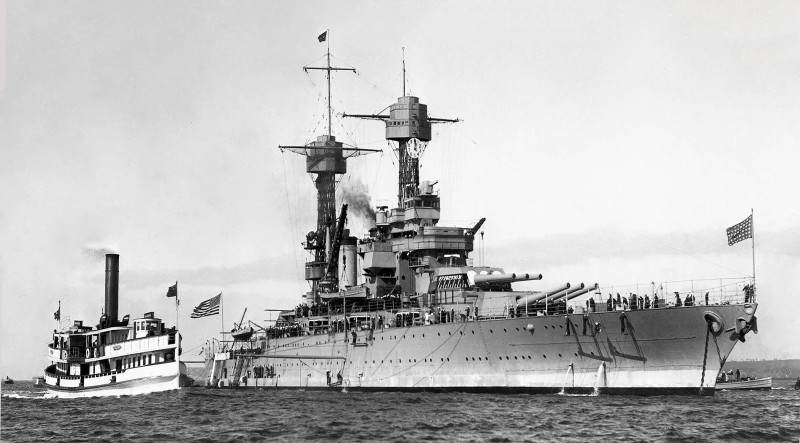
USS California - A typical 14" BB before Pearl Harbor 


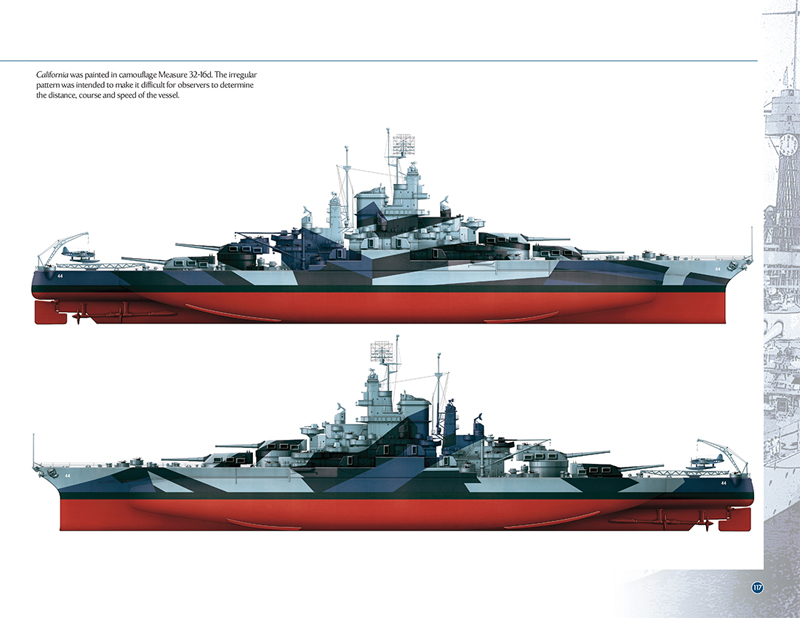
USS California - As rebuilt after Pearl Harbor. 


When the Allies started the series of amphibious landings in both theaters of the war, which were the defining aspect of WW2 for the US and the UK, the older BBs, now edging up in numbers as damaged ships returned to service, found a new role in shore bombardment. From Casablanca and Tarawa through the invasions of the South of France and Okinawa, BBs protected the landing forces while battering enemy positions ashore. Both the new and the old BBs blasted Iwo Jima before the invasion, but the new BBs, despite their more powerful guns, were less successful in the role than the older ships with more practice in this aspect of naval warfare. It was only during the Battle of Leyte Gulf that the older BBs on both sides finally met each other in a traditional naval battle, and by that time the short term IJN advantage of Pearl Harbor had been made good and the result was a massacre. (One of the ironies of the war is that the IJN, in keeping with Western notions of a “Decisive Engagement,” always called for the “annihilation” of their enemies. They did achieve this at the early Battles of the Java Sea, Sunda Strait, and the destruction of Force Z. But after those early months of the war, the most obvious cases of “annihilation” were suffered by the IJN carrier force at Midway and, especially, by the Southern Force at Surigao Strait during the Leyte Gulf battles.)

So during the whole of the Pacific War battleships only did what they were created to do on two nights.


While the older USN BBs had busy and productive service histories, six of the older IJN BBs did almost nothing but consume oil. The other four older IJN BBs were, technically, not battleships at all but rather battlecruisers. Though very powerful ones. 


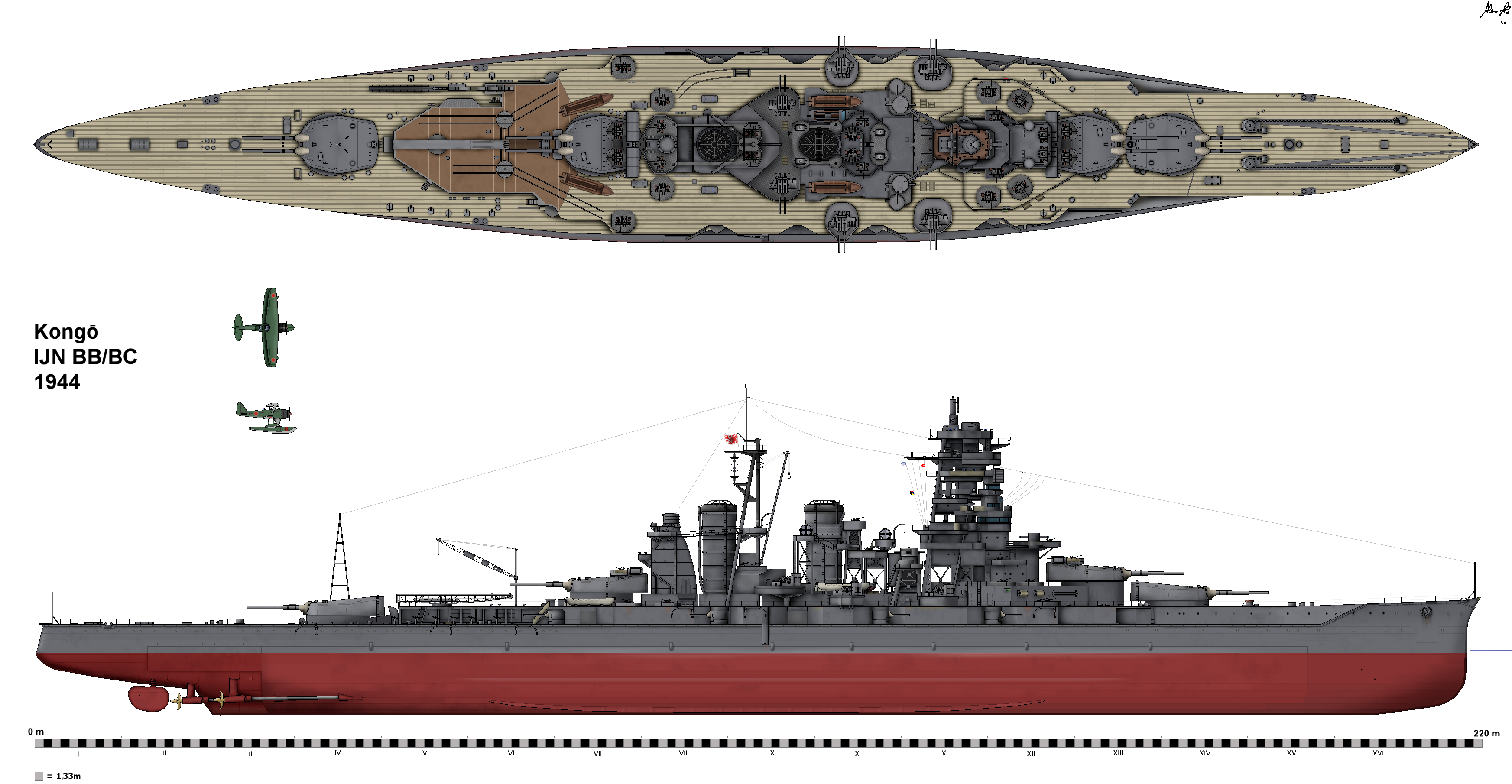
Kongo - Designed and built during the 2nd decade of the 20th century, this class of 14" armed ships performed well throughout the Pacific War. 


These were the only IJN BBs that were worth the investment the nation spent on them. They were fast enough to keep up with the aircraft carriers, so they could serve as escorts like the USN fast BBs, and in a pinch, they could be risked to support IJN operations in the constricted waters of the Solomon Islands -- though two of them would be sunk there, so the risk would not pay off.

Still, the four Kongo class ships would see action from the beginning of the war to the last IJN fleet actions, while the other battleships would be expensive, oil guzzling assets that were carefully conserved until it was too late, and then proved incapable of even "annihilating" little Taffy 3 at the Battle Off Samar. Though they did look impressive.


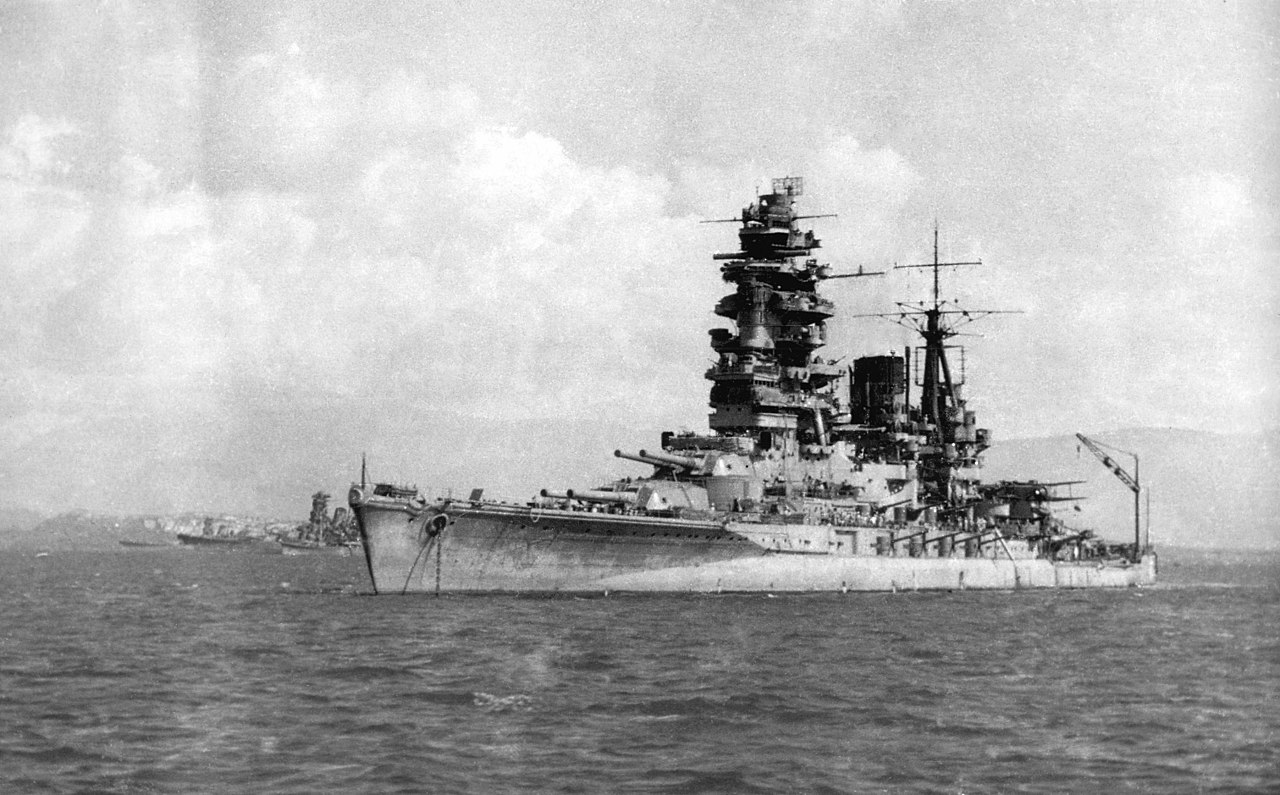
Haruna - IJN equivalent of the USS Colorado class


Yamato - super battleship


Saturday, February 2, 2019

320. So random


Link to Table of Contents


Every Breath You Take

The day after I returned from Portland I walked down to the Bank Cafe only to find it closed with a vague sign saying they hoped to be open soon. The reason I was going there was because they have a good (corporate) HVAC system and that was a particularly smokey day. I figured being there would be the best thing for the health of my lungs given the poor air quality.

When I tried again on Wednesday, after the air had cleared, I discovered they had been closed because of the poor air quality. The logic of this eludes me as I suspect my air cleaner at home is better than what most people have. Some schools closed for the same reason, which was even worse as, with nothing else to do, some of the kids just went outside and played in the murky air. How many people have HVAC systems at home with air cleaning capacity? I would love to have one of those high end systems that bring in air, filter it, run it through a heat exchanger, and then distribute it around the apartment. There’s a second fan pulling air out of the apartment, and through the heat exchanger. You can even adjust the power of the two fans so that your space is positively or negatively pressurized (I’d go with positively to keep the neighbor’s cigarette smoke out.) I’d also like world peace. My guess is that operating a system like that -- even with the heating and cooling units off -- would take more electricity than I currently use for everything else.

After Black Friday or The day after...

The first two blocks of Stockton street are carpeted and entirely free of construction stuff, but I can’t tell if this is the usual just-for-the-season change or if they are actually done. I passed a dog having a nearly orgasmic roll on the grass-like carpet. I can’t tell if they are not finished setting up the holiday street furniture or what. (They weren't finished yet.) The first block seems in good shape but the next block seems incomplete or thrown together at the last moment. Since this is possibly the last year the street will be pedestrianized -- as the subway is supposed to open next year -- you’d think they would go all out. And that second block is the one with the puppies and kittens in the Macy’s windows. Last year it was kind of a mess because several areas -- like the shaft down to the station one hundred feet below -- were still blocked off. This year the entire block is clear.

Black Friday it rained all day but today is sunny and perfect, really. I’m not having any luck thinking of things I need to shop for. Aside from some groceries. I’m ashamed to admit this, but I really have better luck ordering clothes from LL Bean than from dropping into a store. The decline of local retail is one problem I do contribute to. Though, considering how few clothes I buy... And I do try to save something for Christmas Eve. Sadly, the only thing on my wish list so far is having my apartment cleaned by someone other than me. And I usually end up regretting that.

I've been holding on to this hoping to resolve the question of the future of Stockton Street. I believe they are going to return it to traffic use as soon at they complete the electrical work and possibly repave the sidewalk outside Neiman Marcus. The next block up is still blocked off as a staging site for work on the subway, except for a single lane. Maybe they will wait until that's freed up as well. Though it would be odd to have two, newly paved yet unused blocks of street in the heart of Union Square.


Bank Cafe

Now that the scaffolding is down outside, they’ve moved the comfortable chairs back to the corner window. Where I’m now sitting. And so I’m noticing that the Amazon Go store is now open diagonally across the intersection under the Crocker Tower. I’m curious to see how it works, but I’m afraid if I go over there they will grab me and throw me out on the sidewalk for the crime of not owning a smartphone.


Politics... but not what you're thinking

I’ve written before (I’m pretty sure) about San Francisco’s ridiculously large political footprint in California politics. Both our U.S. Senators and our new Governor have held city offices, two of the three were mayors. But now it’s getting out of hand. The former city DA and former California Attorney General and newly elected US Senator is now running for President. I assume she’s trying to steal a march on Gavin Newsom, our newly elected Governor (and ex-Mayor) as they are both such obviously attractive Democratic candidates. Only I can’t support her this time.

The problem is that she has no administrative or legislative experience. I’m sure she would be better than Trump, but that’s a very low bar. Also, it would be nice if she were to do the job we just elected her to do for at least a couple years before running for something else. I’m still waiting to see if Newsom has learned from the mistakes he made as Mayor. If so, then he would be an excellent candidate in four or so years. 


Kamala Harris would probably be a very good U.S. Attorney General if someone else were to be elected President, but I would still like to see her serve out her Senate term. The only silver lining I can see here would be if she moved on and then Newsom appointed Willie Brown to fill her seat for the rest of her term. Now that would be spectacular.


“Every battle is won before it’s ever fought.”

― Sun Tzu

While I really like this quote, I think it’s only true in part. I can think of plenty of battles and wars that were lost before they were fought, but there are also battles that were won against the odds by playing the situation just right. Midway would be an example. And there are other battles won by the side that made the fewest mistakes -- that would be a long list.

But it is true that you need to be prepared to win. El Alamein would be a battle Sun Tzu would have appreciated. Also the Battle of Nashville.


IJN After action assessment

The DDs were great, just not enough of them as the war progressed. CAs also excellent. CLs 2nd rate, Japan could and should have upgraded here. BBs  only the Kongo class was really useful. The USN got better service out of even the antique Arkansas than the IJN did out of its “real” BBs. 

Besides CLs the IJN should have invested in super cruisers, ships with the speed of a CA, the same weapons with perhaps a heavier main battery, and better protection. A description might sound like the Deutschland class, but what I have in mind is more a large CA than a small BB. The IJN could have gotten much more use from these ships than they did from the Yamatos. (6 x 11” in twin turrets, probably 15-20k displacement.) Ironically, the USN thought the IJN was working on larger cruisers like this which is why they built the Alaska class ships. Only the IJN didn't think seriously about it until they learned of the Alaska class, and then it was too late as even the Alaskas didn't get into service until the last year of the war. The Alaskas are actually a bit more ship than I have in mind. The Des Moines class ships are more like it, though they took advantage of rapid-fire 8" guns rather than larger guns.


Tuesday, December 25, 2018

307. The Battle off Samar


Link to Chronology


The Battle off Samar


Prelude

When you’ve been a student of a topic for fifty years, the problem in talking about it is editing your thoughts down to the minimum necessary to do justice to that topic. This is not an easy thing to do. To understand the events of late 1944 you need to know a bit of what came before. And to fully appreciate the dramatic turn of events, you need even more information, especially about the naval officers involved. With this in mind, I’m going to start by talking -- briefly -- about the Japanese invasion of the Dutch East Indies and their conquest of the Java Sea in the spring of 1942. (The text in blue is not about the Battle off Samar, so you can skip it if you are in a hurry, or just not that interested.)

In the late winter of 1942 the Imperial Japanese Navy (IJN) ruled the waves in the Pacific. The battle forces of both the Royal Navy and the US Navy (USN) in the Pacific had been sunk or scattered. The IJN Mobile Force of fleet carriers (CVs), fast battleships (BBs), heavy cruisers (CAs), and destroyers (DDs) (which had attacked Pearl Harbor) roamed at will as (arguably) the most powerful naval force the world had ever seen. In the Java Sea this force was not even needed as the IJN employed smaller, but overwhelmingly capable, forces composed of pairs of powerful heavy cruisers or else destroyer squadrons supported by a light cruiser. Both of these forces had as their main weapon the “Long Lance” torpedo. It would take the Allies about a year to understand the capabilities of that weapon, and until that time their ships would blow up and sink in battles with the Japanese and they didn’t know why (not only were they more explosively powerful than other torpedoes, but their speed and range was so great that they sank ships that believed themselves to be outside the danger area.)

The IJN went from victory to victory, and at almost no cost to themselves as they were at so clear an advantage. We will see the reverse of this at Leyte. Whether it came down to destroyers, heavy cruisers, or carrier air groups, the IJN was the best in the world, and the Allies struggled to even compete. At this time, the drive into the Dutch East Indies was conducted at sea by the the 2nd Fleet under Admiral Kondo with the Carrier Group commanded by Vice Admiral (VA) Nagumo; and 3rd Fleet under VA Takahashi with the Eastern Attack Group (one of the destroyer squadrons) commanded by Rear Admiral RA Nishimura, the Eastern Covering Group commanded by RA Takagi (CAs Nachi x, Haguro) with RA Tanaka commanding another destroyer squadron, Western Attack Group commanded by VA Ozawa in CA Chokai x, Western Covering Group commanded by RA Kurita with CAs Mogami x, Mikuma, Kumano, Suzuya x. We will see many of these officers at Leyte as well.

x = ships sunk as a result of the Leyte Battles.

But things change quickly in modern war and only two and a half years later everything had changed. Nagumo and Takagi had both died when the US invaded and captured the Mariana Islands. Nishimura, now a VA, died the night before the action we are focusing on when his Southern Force was annihilated by the US 7th Fleet at the Battle of Surigao Strait. The IJN lost BBs Yamashiro and Fuso plus CA Mogami in this battle. Elements of 7th Fleet were still pursuing some surviving destroyers and the ships of IJN Force C, commanded by VA Shima, with CAs Nachi and Ashigara. (Nachi was damaged the previous night in a collision with Mogami and would be sunk by air attack about ten days later in Manila Bay.)

In October 1944 the IJN 5th Fleet under VA Kurita was dispatched to defend the Philippines. Kurita had a powerful force of BBs -- Yamato, Musashi (sunk the day before), Nagato, Kongo (sunk returning to Japan after the battle) & Haruna -- and CAs -- Atago & Maya & Takao (all torpedoed on the way to the battle. The first two sank and Takao withdrew to Singapore where she was judged unrepairable), Chokai , Myoko (torpedoed the day before and also ended up unrepairable at Singapore), Haguro, Kumanno, Suzuya, Chikuma & Tone. In addition, there was the Mobile Force now under the command of VA Ozawa. This was a decoy force of aircraft carriers, old battleships that had been partly converted to carriers, with an assortment of lighter escorts. The plan was to show Admiral Halsey, the commander of US 3rd Fleet, some flight decks and have him chase after them -- and away from Kurita’s main body. The air groups that should have made these Japanese ships a powerful fighting force had been destroyed four months before by US 5th Fleet under Admiral Spruance. Now the IJN carriers were empty floating hangers of no particular military value. This plan would work to perfection. 

Now it was the Allies moving from victory to victory and penetrating closer and closer to Japan. Both sides had (for decades) prepared for an anticipated “Decisive Battle” in the Caroline/Mariana Islands area of the central/western Pacific. There had indeed been a battle in the area anticipated, the Battle of the Philippine Sea, but this had been a battle of aircraft and submarines only. The naval air power of the IJN had been destroyed -- and in this war that was indeed decisive -- but the battle fleets had never even seen each other. Now the Allies were invading the Philippines with a major landing on Leyte Island, and the IJN decided to make one last total effort to stop the Allied advance across the Pacific. There would be diversionary fleets to the north (Ozawa with the surviving aircraft carriers but with no aircraft to speak of) and to the south (Nishimura with some old battleships and cruisers, enough to pull strong forces away from Leyte Gulf). The main force would be in the Center under the command of Kurita. With luck, Kurita would be able to sail through San Bernardino Strait and then into Leyte Gulf where his powerful force of battleships and heavy cruisers could destroy the shipping supporting the Allied amphibious invasion and possibly even take a toll on 7th Fleet.

This sounds like a reasonable plan. (Though the invasion had come sooner than expected and it took time to get all the pieces in motion, so the Japanese could not know how much shipping would still be in Leyte Gulf when they could finally arrive. Perhaps a lot. Perhaps most of the ships would have unloaded and departed.) And the fact that it almost did work shouldn’t hide the fact that the USN had more than enough resources to cover all these threats. USN 7th Fleet was in and around Leyte Gulf with a battle force of older ships, many of which had been sunk or damaged at Pearl Harbor. Nonetheless, these were still powerful ships and the ships sunk and then raised at Pearl Harbor had been modernized and were much better than they had been in 1941. And these six battleships were supported by a powerful force of cruisers, destroyers, and even PT boats. But this was only the USN’s second team. The USN’s main strength was 3rd Fleet.

3rd Fleet was also known as The Big Blue Fleet. For the most part, these were ships that had been built during the war -- with a handful of speedy survivors from the pre-war Navy. When commanded by Admiral Spruance it was known as 5th Fleet, as at the Battle of the Philippine Sea. When commanded by Admiral Halsey it was known as 3rd Fleet. Halsey and his staff had been preparing for the invasion of the Philippines while Spruance managed the invasion of the Marianas. Now Halsey would get his first chance to command during a major battle. Unfortunately, this was what the Japanese were counting on, and they weren’t wrong.

I will talk about 3rd Fleets air strength and disposition later, but 3rd Fleet also contained a potential battle fleet. The six new, fast battleships in 3rd fleet were distributed among the Task Groups to provide anti-aircraft protection. But there was a plan to form them into a battle Group (Task Force 34) if needed, under the command of Admiral Willis Augustus Lee (the victor of the 2nd Naval Battle of Guadalcanal). (There were some problems with this plan. Two of the BBs were faster -- and more powerful -- than the other ships. These were the ships that should have been rushed off to deal with the Central Force, but while Halsey flew his flag on one of these ships, Lee, the sub-force commander was on one of the other ships. Task Force 34 -- which never quite existed -- became one of the greatest controversies of the Pacific War, derailing friendships and resulting in a lack of honest information about the situation. It’s impossible to know how large a role this seemingly minor issue of which commanding officers were on which ships had on all this blowing up in Halsey’s face. “The World Wonders.”)

So that’s the basics of the forces and some of the officers involved in what was about to be the largest naval battle of the war. But that’s the Battle of Leyte Gulf. I’m going to jump directly to one of the four sub-battles of this colossal engagement of rival navies. Here is the Battle off Samar. Quite possibly the USN’s finest hour.


The Battle off Samar

The challenge here is to not write too much. Let’s see if I can manage that.

On the morning of October 25th, 1944, RA Clifton "Ziggy" Sprague was overseeing the dawn launch of his anti-submarine patrol -- his task group of five tiny escort carriers (CVEs) had two responsibilities, anti-submarine patrolling and fire support for the troops recently landed on Leyte island prior to the establishment of airfields on Leyte itself. (I love that the US Navy commander for this improbably battle had the nickname, "Ziggy.") Taffy 3 was one of three similar task groups comprising Task Force 77.4. They were all equipped with war-build merchant ships converted to tiny aircraft carriers with the addition of a flight deck and small hanger. 


Unfortunately, they were a third the size of a fleet carrier with only about half the speed and they also lacked the defensive armament. Each CVE featured a single 5” gun in an open mount at its stern. Beside that, they had a few light anti-aircraft guns. And instead of being escorted by fast battleships, cruisers, and destroyers, Taffy 3 was supported by 3 Destroyers (DDs) and 4 Destroyer escort (DEs) (a mini-destroyer developed for the anti-submarine role.)


So that’s what C. Sprague was up to that morning when reports started coming in of ships on the horizon. Large warships moving fast and in their direction. These ships were Admiral Kurita’s Central Force, the main battle fleet of the Imperial Japanese Navy. Central Force had been weakened by air and submarine attack the previous days, but it still boasted the super battleship Yamato, the BBs Nagato, Kongō, and Haruna;  and an especially impressive force of heavy cruisers (Chōkai, Haguro, Kumano, Suzuya, Chikuma, Tone) escorted by two light cruisers and eleven destroyers. This was the most powerful surface fleet the US Navy would fight in WW2.

Kurita had come through San Bernardino strait that morning expecting to run into the full might of Halsey’s 3rd Fleet at any moment. Instead he found an empty sea before him, until he ran into Taffy 3. The IJN had not known about the Taffy’s, so he assumed he was seeing a task group of 3rd Fleet, not 7th Fleet. To him, the CVEs looked like CVs and the DDs and DEs looked like cruisers and destroyers. To him, this looked like the opportunity of a lifetime and he turned his ships loose to chase down and destroy the enemy. This was meant to be the Decisive Battle that both navies had dreamed of for decades. If Kurita could destroy 3rd Fleet, the U.S. advance across the Pacific would be stopped and the invasion of Leyte would be thwarted. 


C. Sprague responded quickly to events. He ordered all his aircraft be launched and then had his little carriers head into some nearby storms where the Japanese wouldn’t be able to see them. He ordered his support ships to try to delay the Japanese and he got on the radio and sought help from everyone he could think of. He would spend the remainder of the day, trying to keep his ships as far from the Japanese guns as possible. This was not really a battle he could “fight” with the insignificant forces under his command. The amazing outcome was that he only lost one CVE, the Gambier Bay, to enemy guns.


The Little Boys
At least one of the destroyer captains didn’t even wait for orders before attacking the oncoming enemy force. The USS Johnston, the closest ship to the enemy, lay down a smoke screen and then headed for Kurita at top speed with guns blazing. Their 5" guns started fires on the CA Kumano. 

C. Sprague now ordered two more DDs (Hoel and Heerman) to form up and launch a torpedo attack. These fleet destroyers were joined, in at least one case against orders, by the DEs (Samuel B. Roberts, Raymond, Dennis, and John C. Butler). Roberts played a crucial role in driving two of the IJN CAs out of the battle and all the DEs fired their torpedoes causing the Japanese ships to scatter as they evaded. 

Given the overwhelming advantages of the Japanese fleet in number and size and preparedness for the attack. This knee jerk response by seven of the smallest fighting ships in the US Navy should have been a joke. It should have been brushed off without even slowing down the approaching Japanese, but that’s not what happened. I will not go into the details of this improbable battle but you can find them HERE.

Besides the actual damage from gun fire and torpedoes to IJN ships, the Yamato, the most powerful battleship in the world, was driven out of the battle, running away from torpedoes from the USS Hoel. And this was Kurita’s flagship (since his original flagship had been sunk by a submarine two nights before). He was now heading in the opposite direction of his fleet and lost track of the battle. To paraphrase Winston Churchill, never was so much achieved by so few.

But the cost of this attack was high. Hoel, Johnson and Samuel B. Roberts were all sunk. It is an odd sort of tribute that in the IJN ship's logs these tiny ships are described as cruisers.


The air attack
I keep specifying "C. Sprague" because there happened to be another Admiral Sprague on the scene. Taffy 2 was commanded by RA Felix Stump while Taffy 1, and Task Force 77.4 as a whole, was commanded by Thomas L. Sprague (no relation). Together, all the little carriers of TF 77.4 carried around 450 aircraft -- what four fleet carriers might have carried.

Even as the attack of the "small boys" was in progress, and continuing long after most of those ships had lost their battles to stay afloat, the aircraft from all three Taffys were attacking the Japanese as best they could. Aside from the Avenger torpedo bombers which you would also find on the bigger fleet carriers, these were mostly Wildcat fighters that had been replaced by Hellcats on the bigger carriers. And even the Avengers were armed with depth charges (for use against submarines) and high explosive bombs (to attack shore targets in support of the infantry on Leyte). And these aircrews had never trained to attack enemy fleets, as that was the job of the fleet carriers. But attack they did.

The Wildcats were, for the most part, only armed with their .50 cal machine guns -- no sane person would advocate attacking heavily armed and armored warships with only machine guns, but that’s what they had and, in fact, six .50 cal machine guns strafing the bridge and decks is not nothing. If nothing else it distracted the officers and crew from the attacks of the destroyers and Avengers carrying more potent munitions. Some Wildcats, even after they had used up their ammunition, continued to buzz the enemy decks making everyone dive for cover.

The results of this prolonged air attack, no matter how impromptu, were considerable. I haven't been able to find a statistic for the number of aircraft lost by Task Force 77.4 during the battle itself. It seems that Taffy 3 lost 128 but that must include planes lost in the Kamikaze sinking of the St Lo and similar attacks on other Taffy 3 carriers after the battle proper. In all of the Battle of Leyte Gulf the US Navy lost around 200 aircraft.


3rd Fleet finally makes an appearance 
The reason the Taffys were so unprepared for this action was that they were a very small cog in a huge machine. Together, the Taffys formed Task Group 77.4, a small portion of 7th Fleet. The bulk of 7th Fleet on that morning was inside Leyte Gulf or still chasing the remnants of two other Japanese fleets down Surigau Strait. The Battle of Surigau Strait  the previous night (just as interesting in its own way) had distracted 7th Fleet’s battle force and expended a lot of ammunition, but there were still powerful forces (including the USS Pennsylvania, which hadn’t managed to find a target during the battle) waiting inside Leyte Gulf should the Japanese make it that far. But they were in no position to come out and assist the Taffys.


3rd Fleet was the main strength of the US Navy -- what was called the Big Blue Fleet. It was divided into four Task Groups each of which was a powerful force by itself. Three of these Task Groups were off to the north chasing Ozawa -- a diversionary force. The fourth, commanded by John S. “Slew” McCain (Senator McCain's grandfather) had been sent toward Ulithi to resupply. When C. Sprague’s calls for help came in, McCain changed course and raced back toward Leyte. Late in the battle, an attack from McCain’s fleet carriers finally hit the Japanese. This was a rushed attack at maximum range, and the results were not impressive. Still, it was an indication to anyone paying attention that things were likely to soon get even worse for the Japanese. The day had not gone well for the Japanese and USN forces (stronger than what they were already facing) were now on every side.


Kurita departs
This is the most controversial phase of the battle. The whole idea of this multi-pronged Japanese attack had been to get Kurita’s Central Force into Leyte Gulf where it could destroy the ships supporting the amphibious landing on Leyte, so that the Japanese Army could then drive the Americans into the sea. The Central Force was now just outside Leyte Gulf and 7th Fleet would have been hard pressed to counter a determined attack. Perhaps Central Force would have been destroyed in the attempt, but they had the opportunity to do some damage and die gloriously, usually an attractive option for the Japanese. Instead, Kurita decided to go home.


I sympathize with Kurita here. The man had had one flagship sunk under him and had lost one of Japan’s two super battleships. He had seen his fleet savaged by a mystery fleet that should have been inconsequential. He knew stronger air attacks were likely. He suspected 3rd Fleet’s battle force was also on the way. He had no idea what awaited him in Leyte Gulf. There might be no good targets. There might be a wall of up to six older battleships. He had already lost many of the IJN’s best ships: (BB Musashi, CAs  Atago, Maya, Suzuya, Chokai, Chikuma were all sunk, three of the CAs in this action, and other ships had been damaged and would be chased down and sunk in the near future) and if he continued, his losses would only grow. Nothing he could have foreseen at this point looked anything like a true victory. And if the full strength of 3rd Fleet -- which he falsely believed himself to be engaging with -- caught up with him before he cleared San Bernardino Strait, he would probably be annihilated. I’m not going to judge a commander in this situation.


Epilogue
There’s a sad epilogue to the story of this battle. I mean from the American perspective, it’s all sad from the Japanese side. Cleanup operations were continuing to the north and the south and the first Kamikaze attacks were also distracting 7th Fleet. After losing the CVE Gambier Bay to battleship shells Taffy would also lose CVE St. Lo to a Kamikaze attack. The effort to recover survivors from the sinking of the Gambier Bay, Johnson, Hoel, and Samuel B. Roberts was delayed and the currents were strong, so that it took the navy a long time to find where the survivors had drifted. Many of the men who had survived the sinkings, died before they could be recovered.

Still, the Battle off Samar turned out to be as close to the anticipated “Decisive Battle” as the Pacific War would see. The US Navy’s equivalent of junior varsity took on the best the IJN had and fought them to a standstill. Ships never intended to see a fleet action faced a powerful battle fleet and gave as well as they received. The USN lost a militarized merchant ship and three escort ships while the IJN lost three of their powerful heavy cruisers sunk. The Japanese fleet would never again sortie in an attempt to engage in battle (Ten Go, the sortie of the Yamato with a few escort ships in 1945, was a Kamikaze operation.)


Tuesday, August 29, 2017

194. TURKEY TROTS TO WATER


The World Wonder'd

There's a new book out about one of my favorite Pacific War battles titled The World Wonder'd: What Really Happened Off Samar. This title is designed to appeal to people who already know something about the battle, and to keep Admiral Halsey spinning in his grave.

I've written about the battle before, but, I can't recall if I've written about the radio message. Nelson's flag message before Trafalgar may be more famous, but no radio message is more famous in the history of the U.S. Navy. 

At the time, coded messages were padded at both ends with more-or-less nonsense phrases. In this case, the phrase at the beginning of the message was TURKEY TROTS TO WATER GG. Followed by the actual message FROM CINCPAC ACTION COM THIRD FLEET INFO COMINCH CTF SEVENTY-SEVEN X WHERE IS RPT WHERE IS TASK FORCE THIRTY FOUR RR. Now, at the time, the part in bold was enough to upset Halsey, as Nimitz (CINCPAC) was questioning where the task force he wanted covering San Bernardino Straight was, and Halsey hadn't dispatched it. But then came the final padding phrase, that seemed so relevant that the people decrypting the message had not removed it, but sent it to Halsey along with the message, THE WORLD WONDERS. This drove Halsey into a rage as it sounded like Nimitz was very openly questioning his conduct of the battle -- which he was, but THE WORLD WONDERS was just a freak accident on the worst day of Halsey's life. (There's actually a Wiki entry for this message, HERE.)


There are two famous "action" tropes, one of which goes back to Homer. There's the scene where the protagonist puts on all his armor and weapons, at the end of The Odyssey, Ulysses, together with his son and father, armor up with Athena to assist them. In Predator 2, Danny Glover's character does the same thing, out of the trunk of his car, before going into the meat locker building for the big fight. The other trope is that the hero loses his main weapon or weapons and has to overcome while at a disadvantage. In Predator, Arnold Schwarzenegger's character has to improvise explosive arrows in that final fight after losing all his commando gear. 

The events leading up to the sending of the message above, demonstrated that Halsey lacked the intuition (which Spruance, at that moment Nimitz's Chief of Staff, had in spades) of knowing where he should be on the battle field and what he should be doing. As a result, we get the battle I've written about before, with the escort carriers, destroyers and destroyer escorts, the sub-junior varsity, facing off against the cream of the Imperial Japanese Navy off Samar. A U.S. force intended and trained for anti-submarine and landing air support, took on and fought off -- arguable defeated, when you consider the loses on each side and who ended up in control of the battle field -- the Japanese in the battle that came closest to being the Decisive Battle both navies had planned on for decades. (The Battle of the Philippine Sea, won by Spruance, was actually more "decisive" but it looked nothing like what everyone had expected, as it was fought entirely by aircraft and submarines).

Had the battle been fought the way Nimitz and Lee (the U.S. battle force commander) would have preferred, the Japanese battleships and cruisers would have been confronted by a similar array of U.S. Navy ships. That would have been the battle everyone had long imagined. Instead, thanks to Halsey, we get the action movie trope which is far more interesting. Though, to this day, the world still wonders and speculates about how that other battle, between USN and IJN battleships, would have played out.


The YouTube series "The Great War" is currently covering the Third Battle of Ypres and has just explained how British general Plumer has noticed a way to counter Ludendorf's new defensive in depth approach on the Western Front. After three years of unimaginably bloody fighting, Ludendorf noticed that it was better to hold the front with lighter forces, but in depth, and counter-attack any advance. Plumer noticed that this meant the Germans would give up the first lines of their positions with very little fight. By taking only what the Germans were willing to give up, over time the British could make substantial gains a little at a time. This is not Patton's rock soup, but it is related to rock soup. 

I mention this, along with what I've said above about Halsey and Spruance, because it shows how long it can take -- three years during the Great War -- before commanders with a knack for noticing the crucial weakness of the enemy under new circumstances can work themselves into positions where they can achieve something. 

In retrospect, the First Battle of Verdun (we've just started the Second Battle) looks like madness, because the French seem to have been acting as though it was Sedan in the Franco-Prussian War. It would have made so much more sense to have treated Verdun like it was the same as anywhere else along the front. The value of that position, in 1916, was not worth the price paid to defend it. 

Stalingrad, thanks to its position on the river, might have been worth the price paid on both sides to capture and to defend it, though I'm not at all sure of that. But Verdun, if lost, could easily have turned into a dangerous bulge in the German lines, especially if the French had thrown their forces on its flanks rather into its teeth. Just speculation, of course.

The European armies viewed the American Civil War as an amateur show, and since the troops were almost entirely militia, there's some truth to that. But the lack of a large standing army, with an entrenched officer corps, made it easier for junior (and retired) officers like Grant and Sherman and Sheridan to rise to positions of command. I think Grant (and Lee) have reputations as field commanders that are better than they deserve, but Grant could have schooled the Entente Powers on how to go about winning their war. (The main difference being that, at the end, all the Union armies were under Grant's command, whereas the Entente was herding cats with five distinct major national armies in the field.)

A Failure To Thrive

I've collected a list of potential book titles including A Failure To Thrive. Has anyone ever started out with a title and then written a book to fit? And what would this book be about? Ignoring the non-fiction options, I suppose this would be about a person who passes through childhood and adolescence and into young adulthood so damaged that there is no future for him or her. The only question is how will the person destroy him or herself. Lucy Barton and Renee, from The Elegance of the Hedgehog, turn out to be surprisingly resilient, to thrive despite their early circumstances. 

It would probably be more striking, and even more believable, if the protagonist came from a more generous background. Of my young online acquaintances, the one most likely to fit this title is the one with, in many ways, the most going for her. (Actually there would be a tie here, with a guy with pretty stereotypical issues.) 

But why would anyone want to read this book? It could well turn out like Hunger (the one by Knut Hamsun -- it turns out there are several books with that title) -- and that book was a pretty complete waste of my reading time. Though I do like to tell the story of reading that and pleading with the character, by the end, to finally fucking die. In a way this is the ultimate anti-hero. 

Next time, Paper Bullets of the Brain (from Much Ado About Nothing). 


Friday, November 25, 2016

81. Veblen + Barton


Previous - 80. Medium + Nostalgia


Status symbols

The other day someone reported to me that my cell phone wouldn't accept messages, I confirmed that this was true. Today I went into the new AT&T "Flagship" store next to the Powell Street cable car turnaround to address this issue. It wasn't quick, but the person who was helping me did get it sorted out. 

One of the reasons it took a while is that this person had very long fingernails which made tapping on her various screens, or on my keypad, challenging. I managed to refrain from telling her why she had long fingernails -- at least why Thorsten Veblen thought she had long fingernails. At least I had something to think about while she was navigating a myriad of screens and tapping away, without being able to use the tips of her fingers.

According to Veblen, long fingernails are a classic status symbol -- they announce to the world that you aren't expected to do physical labor (because you can't.) The fashion started with the idle classes, was then picked up (as is the usual case) by the underclasses and finally made it's way to the working classes. It's been too long since I read Veblen, but I'm pretty sure high heels and men's ties fit into this same class of status symbols.


Barton

My book club met over the weekend and one of the clubbers mentioned that her father had served in WW2 on a destroyer that sank in the Pacific. I restrained myself (surprisingly) from immediately asking the name of the destroyer, and then forgot about it. Today I finally remembered and sent her an email inquiry. Turns out her dad had been on the USS Barton. 

I would have been interested -- and probably would have known something about -- any destroyer sinking of the Pacific War, but the Barton is particularly interesting. I've already told (my version) of the story of the (naval) Battle of Guadalcanal, one of my favorite stories of the war. Every account of the battle is confused because, even at the time, everyone was confused and very tired and the whole battle was like a fever dream with a body count. But one aspect of the battle has at least one reliable eye witness and that is the sinking of the USS Barton by the Japanese destroyer Amatsukaze. The reliable witness is Tameichi Hara, captain of the Amatsukaze, who published Japanese Destroyer Captain about his war time experiences. What are the odds that I would run into someone who had a family member who participated in that battle? 

On the other hand, I think there are great stories (which for me really just means that you can't describe the battle without including a bunch of back story) pertaining to at least eight major sea battles of the Pacific War. And I'm sure I could come up with stories for additional battles if I really thought about it. Though what really puts the Pacific War in a class by itself is that it even has eight major sea battles (and you could at least double that number if you include the less-interesting-to-me battles.)

Researching the Barton, I discovered something I didn't know, that several of her sister ships had been built at the Bethlehem Shipyard here in SF -- what is now known as Pier 70 -- where I've worked a number of events now. The Benson class destroyers were similar to, and precursors of, the better known Fletcher class.

As always, this leads me to marvel at American production during the war years. The Benson and related classes (don't ask) included 52 ships built from 1938-1943 at shipyards all across the U.S. Which sounds impressive until you read that the Fletcher (175) and related classes (58+98) totaled 331 ships. And each one of these ships had its own story.

Some of my favorite books about the Pacific War were written from the perspective of a particular ship. Now these ships were famous because of something they did or because they took part in famous battles (and many of them ended up getting sunk), but telling the longer story of the ship rather than the short story of a battle is much more interesting and revealing about the wartime experience. The books I read about the USS Washington, Enterprise, and Indianapolis were good, but my favorites were the ones about the little escort carrier USS Gambier Bay and the even smaller destroyer escort USS Roberts. The Roberts was a truncated destroyer, a mini-Fletcher -- a pony serving with horses. It had similar guns and torpedoes and depth charges, only fewer of them. It wasn't as fast or as seaworthy. It was intended to free regular destroyers from convoy and anti-submarine duty for which they were over qualified. DEs and CVEs were ingenious improvisations that could be produced quickly and in quantity by the same commercial shipyards that turned out hundreds of Liberty Ships. But they were also war winners. 

The Roberts and the Gambier Bay were written about because they took part in -- starred in -- the Battle Off Samar in 1944, but you would be making a mistake if you jumped ahead to that part of the book, as what is most interesting is how these little ships were turned into ships of war by green crews and a few officers and old Navy hands. You find the same, self-sufficient, floating community-unto-itself that you find in Moby Dick or the Patrick O'Brien novels. Each of the hundreds of warships build before and during WW2 became its own little war-making world. Of course with the USS Washington the real war was with the USS South Dakota, not the Japanese, but that's another story.    


Next - 82. I've decided