Showing posts with label Battleships. Show all posts

Saturday, February 9, 2019

321. Mid-century Battleships


Link to Table of Contents


Mid-20th Century Battleships

I’ve written before about how often military units are not used in the way that was intended -- a mountain division first seeing action on a Dutch island that was entirely below sea level except for some levees, or a Panzer division sent to the front as infantry when their tanks were intercepted by the enemy. Similar to this is military equipment used in ways not foreseen like B-25s used as strafers rather than as high altitude bombers, or US Army pursuit planes used for ground attack. But there’s also a spectacular naval example of this same phenomenon.

For several generations battleships were developed as a modern version of the traditional line-of-battle ships from which they derived their name. They would sail in lines and fight similar lines of enemy ships. The Battle of Jutland is the best example of what was intended. By the end of 1941 the US Navy (USN) had built up a force of seventeen battleships for use in this manner. The Imperial Japanese Navy (IJN) had a similar force of ten ships. Due to the naval treaties following the Great War and the effects of the Great Depression, several of these ships on both sides were quite old and already considered obsolete. The IJN shortage of ships was one of the reasons they attempted to level the playing filed by sinking the USN battle fleet at Pearl Harbor. 

In the short term, they removed seven BBs from the US fleet -- so that the numbers now stood at USN ten vs IJN ten. In the long run they only succeeded in removing two BBs from the fleet while the other five returned to service and three returned as vastly improved warships. Meanwhile the USN was steadily adding newer and more capable BBs to their fleet while the IJN concentrated on producing two super battleships.

But what I want to look at here is how the ships were actually used. After Pearl Harbor the USN had two new, fast BBs which could be used to contain German BBs in the North Atlantic, before they were transferred to the Pacific where they acted primarily as platforms for Anti-Aircraft Artillery (AAA) in defense of the aircraft carriers that had become the prime naval weapons of the war. This fast BB force grew to six and finally to ten by the end of the war. Only once, in desperation, were the new BBs thrown into a surface engagement against the IJN.


USS Washington - One of the first modern, 16" BBs and the victor at 2nd Guadalcanal


Immediately after Pearl Harbor, the USN also had one ridiculously old BB (the USS Arkansas), 


USS Arkansas - The last of the USN 12" gun BBs


two very old 14" armed BBs (The USS New York and USS Texas), four standard Great War era BBs, and a single improved, post WW1 BB (the USS Colorado). In the Pacific some of these ships were held out as a desperation guard in case of a Japanese assault on the West Coast -- which the IJN didn’t have enough oil to mount. While the remainder of the ships were used to protect convoys in the Atlantic. Even ships like the Arkansas were ideal for this role as, while slow, they were faster than a convoy, which could only sail as quickly as its slowest ship. They acted as an effective deterrent to any German surface raider. This is the way the USN BBs spent 1942 while the ships sunk or damaged at Pearl Harbor were raised and repaired.
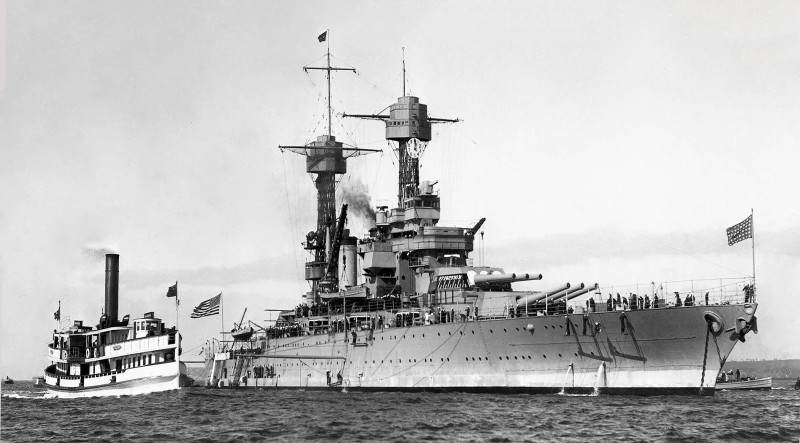


USS California - A typical 14" BB before Pearl Harbor 
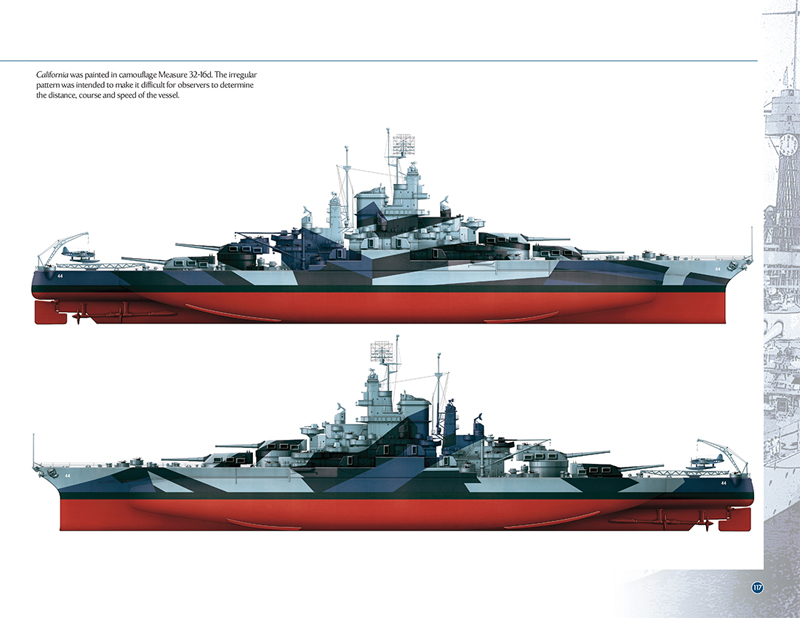


USS California - As rebuilt after Pearl Harbor. 


When the Allies started the series of amphibious landings in both theaters of the war, which were the defining aspect of WW2 for the US and the UK, the older BBs, now edging up in numbers as damaged ships returned to service, found a new role in shore bombardment. From Casablanca and Tarawa through the invasions of the South of France and Okinawa, BBs protected the landing forces while battering enemy positions ashore. Both the new and the old BBs blasted Iwo Jima before the invasion, but the new BBs, despite their more powerful guns, were less successful in the role than the older ships with more practice in this aspect of naval warfare. It was only during the Battle of Leyte Gulf that the older BBs on both sides finally met each other in a traditional naval battle, and by that time the short term IJN advantage of Pearl Harbor had been made good and the result was a massacre. (One of the ironies of the war is that the IJN, in keeping with Western notions of a “Decisive Engagement,” always called for the “annihilation” of their enemies. They did achieve this at the early Battles of the Java Sea, Sunda Strait, and the destruction of Force Z. But after those early months of the war, the most obvious cases of “annihilation” were suffered by the IJN carrier force at Midway and, especially, by the Southern Force at Surigao Strait during the Leyte Gulf battles.)

So during the whole of the Pacific War battleships only did what they were created to do on two nights.


While the older USN BBs had busy and productive service histories, six of the older IJN BBs did almost nothing but consume oil. The other four older IJN BBs were, technically, not battleships at all but rather battlecruisers. Though very powerful ones. 
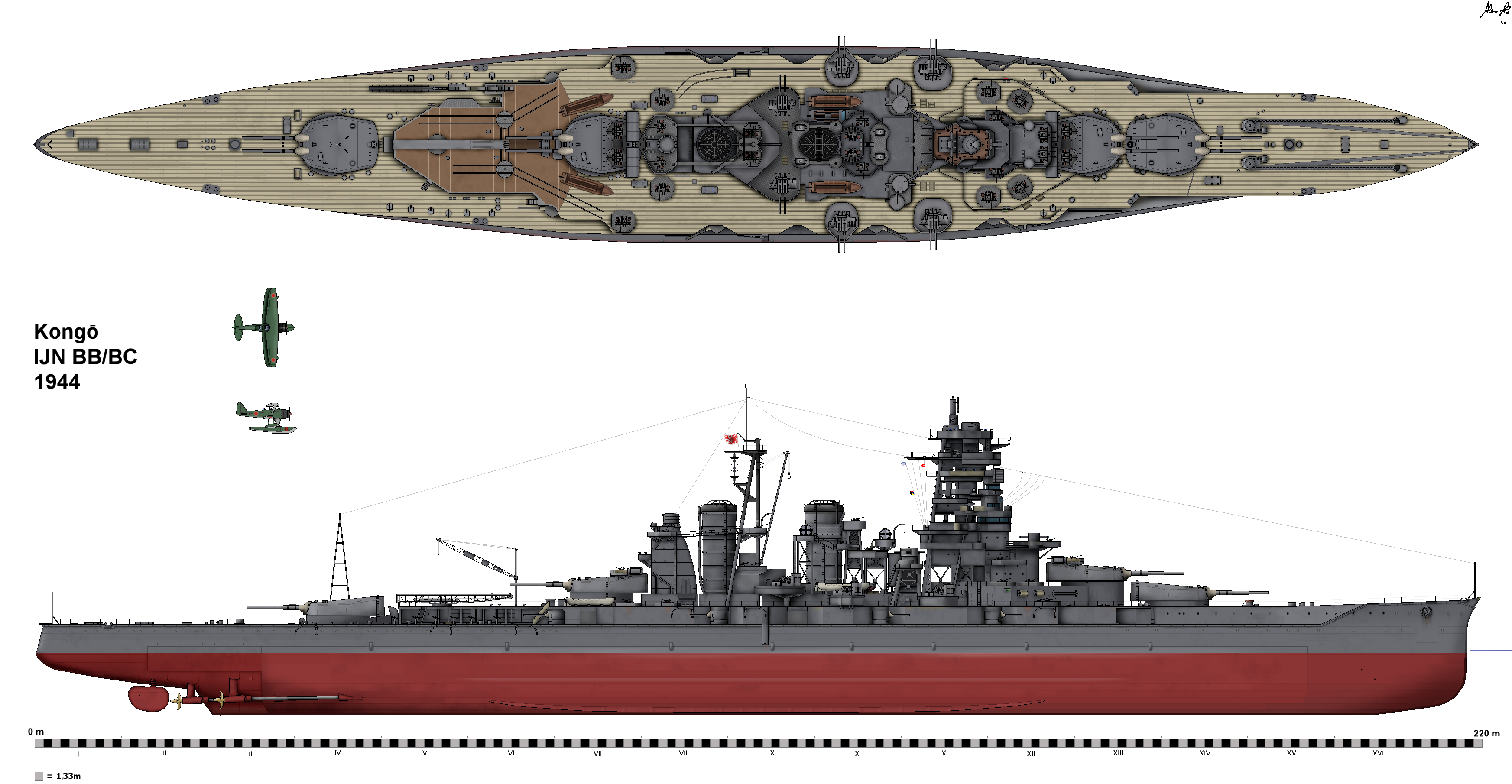

Kongo - Designed and built during the 2nd decade of the 20th century, this class of 14" armed ships performed well throughout the Pacific War. 


These were the only IJN BBs that were worth the investment the nation spent on them. They were fast enough to keep up with the aircraft carriers, so they could serve as escorts like the USN fast BBs, and in a pinch, they could be risked to support IJN operations in the constricted waters of the Solomon Islands -- though two of them would be sunk there, so the risk would not pay off.

Still, the four Kongo class ships would see action from the beginning of the war to the last IJN fleet actions, while the other battleships would be expensive, oil guzzling assets that were carefully conserved until it was too late, and then proved incapable of even "annihilating" little Taffy 3 at the Battle Off Samar. Though they did look impressive.
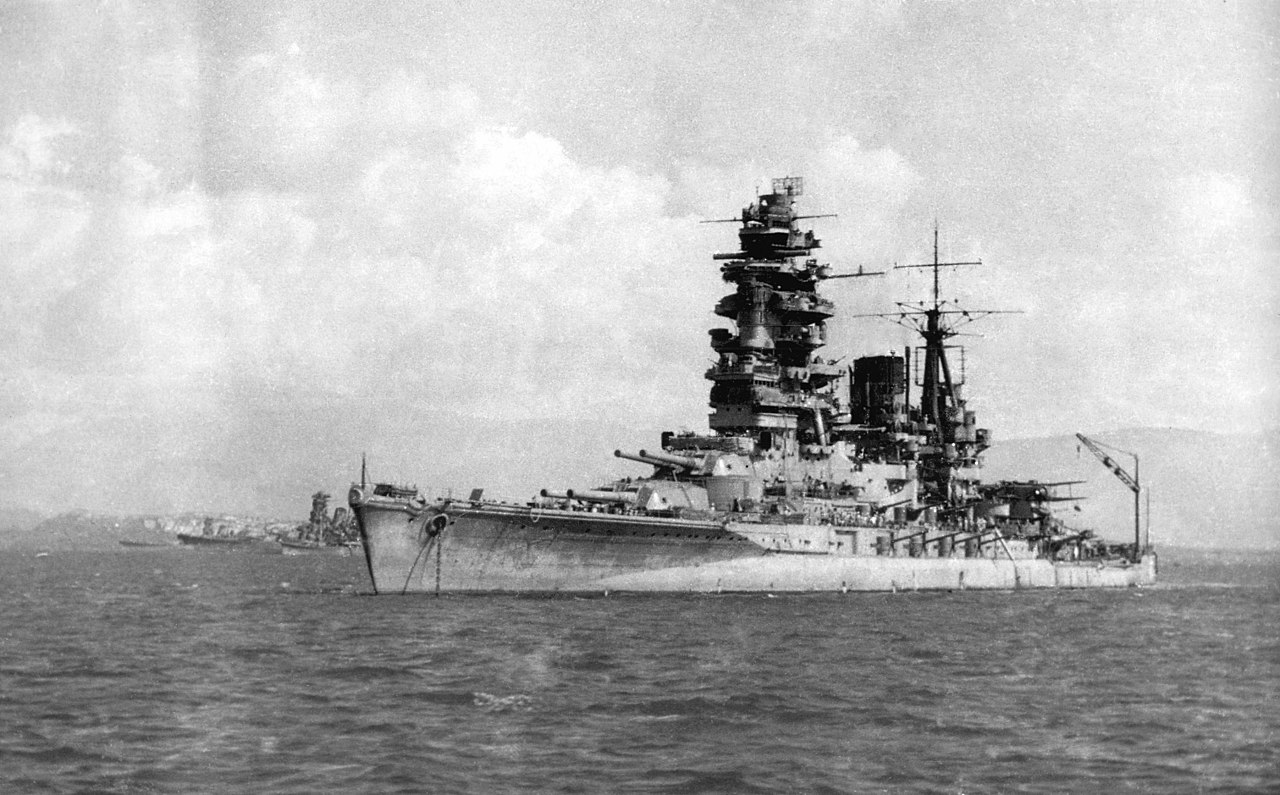

Haruna - IJN equivalent of the USS Colorado class


Yamato - super battleship


Thursday, December 8, 2016

89. A Holiday Miracle


Previous - 88. A simple plan


Absalom

Last night I was writing about eudaimonia and the daemon (Aristotle and Socrates) and today I run into this passage, "... 'he [Quentin's grandfather] said how Sutpen was talking about it [how Sutpen ended up in Mississippi] again, telling him again before he realized that this was some more of it, and he said how he thought there was something about a man's destiny (or about the man) that caused the destiny to shape itself to him like his clothes did, like the same coat that new might have fitted a thousand men, yet after one man has worn it for a while it fits no one else and you can tell it anywhere you see it even if all you see is a sleeve or a lapel: so that his -- ' ('the demon's,' Shreve said) ' -- destiny had fitted itself to him, to his innocence, his pristine aptitude for platform drama and childlike heroic simplicity...' " 

So is Faulker using "demon" in the sense of Socrates's daemon? Kind of looks like it. And isn't this book the story of Sutpen's seeking his eudaimonia?

Umbrella

We've been having a spell of mild weather, a little cold but no rain for a while. So when I went to get my umbrella before going out today I was surprised to find it not in any of the usual places -- and there aren't that many places I would put it. I left with my back-up umbrella while trying to remember where I might have left it. There were two places I recalled putting it down and being concerned I wouldn't remember to collect it before I left. My (new) plan was to have lunch at my favorite pizzeria and then walk over the hill to the theater that was at the top of my list.

At lunch -- I'm still here -- I got to chatting with the proprietor who has been here almost as long as I've been eating here (20 years for her, 23+ for me). Since I am here a lot, I asked if they had a lost and found and described my umbrella. There was another restaurant on my short list, but this wasn't it. She found it! 

Since it's the nicest umbrella I've ever owned (corporate shwag from the Bank Cafe), I'm delighted.


Maybe this was karma. Yesterday I went walking with a friend who had seen some public art she wanted to photograph while being driven home from the airport by a taxi driver, taking what she described as a bizarre route. My first thought was the convoluted Pennsylvania to 7th Street, I-280 bypass I learned while I was driving a cab (16 years ago now?). Sure enough, the sculpture she had seen was where that route makes an odd jag -- because Pennsylvania and 7th don't quite connect. In fact, the cab driver was taking her by a really brilliant route that even I wouldn't have thought of before.


Because today is December 7th, the anniversary of the Pearl Harbor attack, the accounts of the few remaining U.S. survivors have been in the news. I listened to two of them (the second one I couldn't finish, he had clearly told the tale too many times and whatever the fish had looked like originally, it was now a Leviathan). The first survivor had been on the battleship U.S.S. Pennsylvania (rumour has it Pennsylvania and the other "state" streets in that neighborhood of SF are actually named after battleships. The order of the streets don't seem to match the order the battleships were built, but that's not definitive proof the tale isn't true.) 

I've read accounts of all the other battleships at Pearl Harbor but I don't recall ever hearing about the Pennsylvania. She was unique because she was sitting in dry dock on that Sunday. I hadn't realized she was fully manned -- I thought maybe her crew had been ashore while the ship was being worked on. But no.

The Pennsylvania and Arizona were sister ships (Pennsylvania class), and therefore competitive. (While they had been the newest and most powerful U.S. battleships when the U.S. entered WW1, they didn't join the Grand Fleet because they were oil, not coal, fired -- I just learned this.) One ship (I think the Pennsylvania, had won a band competition the previous night so the other was determined to win the football game scheduled for that Sunday. Our survivor was on the football team and had already suited up when the attack started. He had to climb to his battle station in the crow's nest -- way up there on these ships at this time -- with his pads still on.


The Pennsylvania was damaged by a bomb during the attack and two destroyers sharing the dry dock at the time, were virtually destroyed. 


This is a model showing the dry dock before the attack.


And another model showing what it looked like after the attack.

But the crew fought the ship just as they would have if they had been in the water. At least they didn't have to worry about sinking, though the magazine explosion that happened to Arizona could just as easily have happened to them. 

There were four classes of battleships at Pearl Harbor that day, but two of the classes were very similar so we can say there were two old Nevada class ships, the U.S. Navy's first super-dreadnoughts; two Colorado class ships the most powerful and newest battleships present, mounting eight 16" rifles each; and the remaining four similar battleships, each bristling with twelve 14" rifles in four triple turrets. The Pennsylvania and Tennessee layout was a great look, that would have returned in he late 1940s had the Montana class ever been built. 

While all these ships -- except for the shattered Arizona and the side-less Oklahoma -- went on to contribute to the war effort in both the Atlantic and the Pacific, all these ships were already obsolete on that December 7th morning with the brand new USS North Carolina and USS Washington already in service in the Atlantic. None of the Pearl Harbor battleships had the speed to escort aircraft carriers. Even during the dark days of mid-1942, what had been the U.S. Navy's "Battle Fleet" was held in reserve out of range of IJN carrier aviation. (The Oklahoma was hit by five torpedoes on the same side before she could seal up her internal spaces. She turned turtle and sank. She was re-floated to clear the mooring position but was only used as a sort of floating warehouse during the war. The story of her re-floating is well told in Morison's history of the war) 

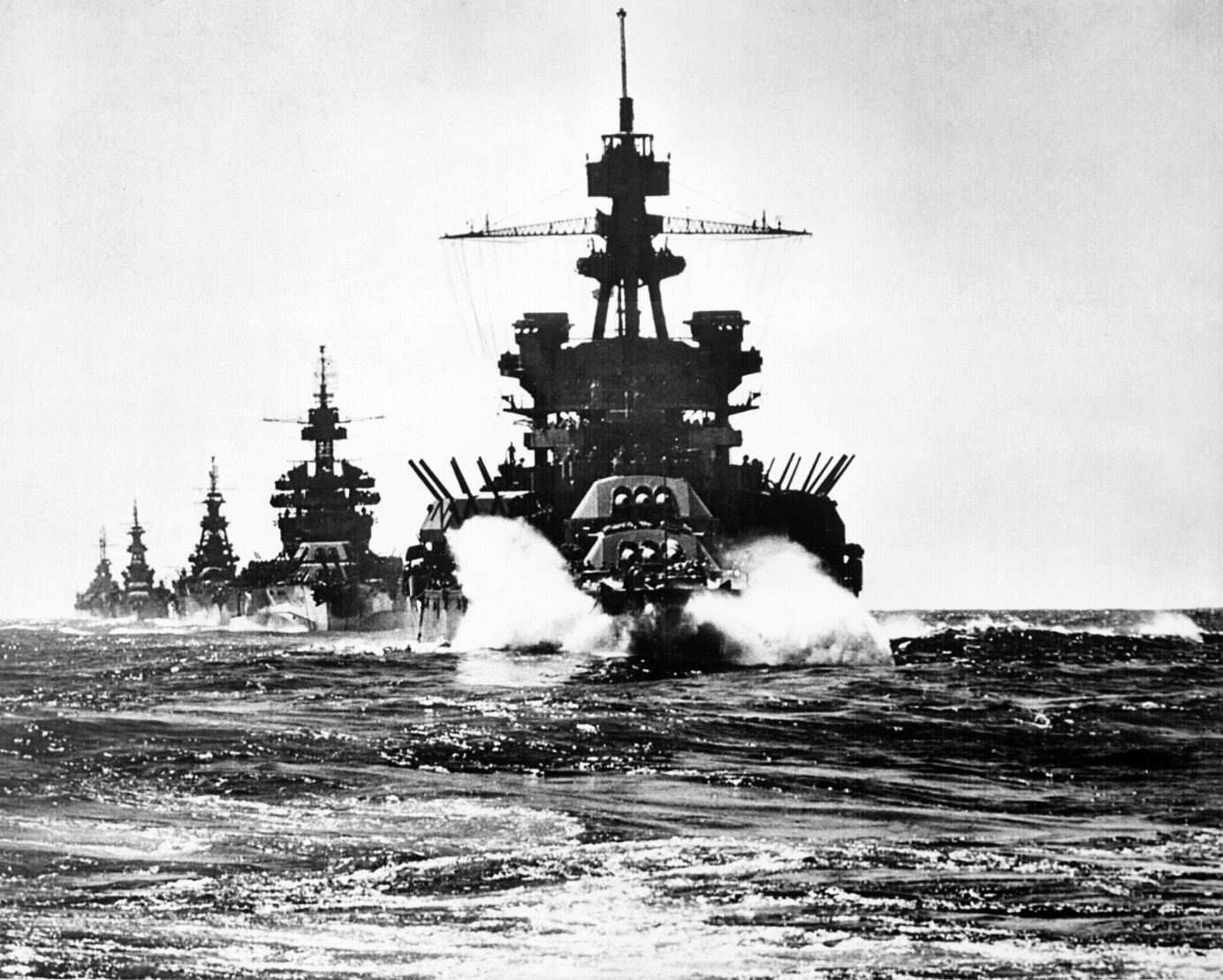
The Navy was clever in making only essential changes to these older battleships during the war. Some of the ships that were most damaged on December 7th lost those towering crows nests and ended up looking almost modern with a profile more like North Carolina class ships and radar. The Pennsylvania kept her forward crows nest but gained modern twin 5" dual purpose turrets instead of the old single 5" guns in her hull. In one of the more famous photographs from late in the war she can be seen leading a line of other old battleships with her decks bristling with these new secondary batteries.


The ship behind the Pennsylvania is one of the Colorado class battleships as revealed by the twin instead of triple main gun turrets. I looked around some more and found the 2nd ship is the USS Colorado, but the next two ships are heavy cruisers, followed by one Cleveland class "light" cruiser. This arrangement makes sense since the first and last ship have good anti-aircraft armament while the ships in the middle do not.

Next - 90. Moneytime