Showing posts with label The Pacific War. Show all posts

Wednesday, August 22, 2018

297. The Decisive Battle


The Decisive Battle

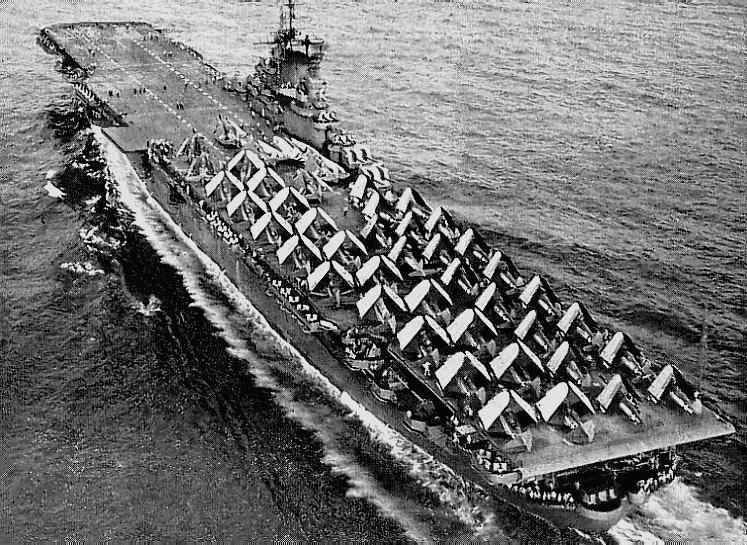
There are so damn many YouTube channels devoted to military history it’s getting ridiculous. There are now two devoted to doing short ship biographies. I click on them thinking, well, I know this material, but I wonder if they will cover X, and then I listen to the entire thing and learn a few things I didn't know. And since there have been a series of them on WW2 USN ship classes recently, it’s got me thinking of yet more ways to address the ungraspable scope of late Pacific War conflict. Yes, I know I need help, but until I receive it, here’s a “quick” look at the “Decisive Battle” of the Pacific War that doesn’t go into the action, but merely looks at the ship assets at the time.

The Imperial Japanese Navy (IJN) was focused, before the actual war, on a Decisive Battle that it imagined would occur in the Western Pacific somewhere around the Caroline/Mariana Islands. All their plans -- including the ships and planes they chose to build -- were in the interest of winning this battle. They imagined the US Fleet would have to fight its way across the Pacific, getting weaker and weaker as it suffered losses from submarine, aircraft, and other attacks. Only when it was weaker and over extended would they charge out with their heavy battle force to crush the USN. The only part of this plan that went the way the IJN hoped was their husbanding of their battleship assets to mid 1944. Everything else was a disaster.

The USN did suffer losses, severe losses, especially during 1942. But as they surged forward they brought with them floating dry-docks and other repair assets that allowed them to maintain their ships even in the Central Pacific. And the flow of ships returning to America for more extensive repairs was more than offset by the constant addition of new ships to the fleet. The commissioning of new ships increased year by year and was still going strong when the war ended. As often happens, the IJN had expected their opponents to do what they would/could do. (The USN made the same mistake when it took them over a year to notice that Japan was not building new tankers and destroyers fast enough to replace their losses. Once they realized this, those classes of ships were made priority targets and their losses surged until Japan had a severe shortage of both.)

Now, there is one problem to going into asset detail about “the” Decisive Battle of the Pacific War -- there were kind of two of them. The Battle of the Philippine Sea was the decisive battle. After that engagement the IJN had no chance of winning. But that had been one of the carrier vs carrier battles where surface ships didn’t engage each other. The Decisive Battle everyone envisioned had to involve the battleships. So there is also a sub-Decisive (or post-Decisive) Battle of Leyte Gulf. I’m just going to cover the final battle as that should make my point. 

Also, I can’t help pointing out that two more USN new battleships, two battle cruisers (technically "Large" cruisers), and twelve new heavy cruisers in addition to thirteen Essex class carriers and three even larger Midway class carriers were in the pipeline and would be commissioned later in or just after the war ended.

I will list the ships belonging to the major divisions of each navy’s forces at Leyte Gulf. I will also, and this is central to my point, indicate if the ship was commissioned during the war or before the war began. What you will see, I believe, is that the USN fleets the IJN actually encountered in mid-1944 were to a large extent a new navy -- one that hadn’t existed on December 7th, 1941. While the IJN fleets would be what had survived the fighting to that point.


The Battle of Leyte Gulf - October 1944

USN Third Fleet, Task Force 38
Task Group 38:1 - CVs (Large Fleet Carriers) Wasp, Hornet, Hancock - CVLs (Light Fleet Carriers) Monterey, Cowpens - CAs (Heavy Cruisers) Chester, Pensacola, Salt Lake City, Boston - CLs (Light Cruisers) San Diego, Oakland

Task Group 38:2 CV Entrepid - CVLs Cabot, Independence - BBs (Battleships) Iowa, New Jersey (Halsey's flagship) - CLs Biloxi, Vincennes, Miami

Task Group 38:3 - CVs Essex, Lexington - CVLs Princeton, Langley - BBs Massachusetts, South Dakota - CLs Santa Fe, Birmingham, Mobile, Reno

Task Group 38:4 - CVs Franklin, Enterprise - CVLs San Jacinto, Belleau Wood - BBs Washington (Lee), Alabama - CAs Wichita, New Orleans 

USN Seventh Fleet, Task Force 77
BBs West Virginia x, Maryland y, Mississippi, Tennessee y, California x, Pennsylvania y- CAs Louisville, Portland, Minneapolis, HMAS Shropshire - CLs Denver, Columbia, Phoenix, Boise

x = Sunk at Pearl Harbor. y= Damaged at Pearl Harbor

Task Unit 77.4.3 - CVE (Escort Carriers) Fanshaw Bay, Kalinin Bay, Gambier Bay, White Plains

Task Units 77.4.1-2 had similar numbers of war-built escort carriers

CA HMAS Australia and CL USS Honolulu had been badly damaged prior to the start of the battle and were retiring to Manus for repairs.

IJN 
Northern Force -  CV Zuikaku - CVLs Zuihō, Chitose,  Chiyoda - BBs Hyūga, Ise - CLs Ōyodo, Tama, Isuzu
Center Force - BBs Yamato, Musashi, Nagato, Kongō, Haruna - CAs Atago, Maya, Takao, Chōkai, Myōkō, Haguro, Kumano, Suzuya, Tone, Chikuma - CLs Noshiro, Yahagi
Southern Force -  BBs Yamashiro, Fusō - CA Mogami

Second Striking Force -  CAs Nachi, Ashigara - CL Abukuma 

So, at the closest thing the Pacific War had to the imagined "Decisive Battle," the IJN could only bring two new super-battleships and three new light cruisers. Meanwhile, aside from Seventh Fleet's old fire support battleship force and the heavy cruiser force (the new heavy cruisers were just starting to hit the fleets), the USN was almost entirely wartime construction.

What would also be interesting to show (I have to draw the line somewhere) would be the USN assets that weren't even mobilized for this battle. While the IJN had been carefully -- arguably, too carefully -- husbanding their main battle force for this moment, the USN had been using their assets more vigorously which meant that there were, for example two battleships that were not present for one reason or another (they were either being rested or repaired). And the same was true of all the other classes of ships. 

And since all this data about the USN fleets is here, as I've mentioned before, you can see that Admiral Lee had his flag on the USS Washington when he should have been on either the Iowa or New Jersey so he could lead the fastest and most powerful battleship force Third Fleet could delegate. And Halsey had his flag on the New Jersey when it should have been on a cruiser for maximum flexibility. 

(I've been thinking about this since I published it last night and I want to give Admiral Lee the benefit of the doubt here. He had a strong bond with the Washington and her crew, and if you divided the American battleship force into two equal units, three fast and three slow, then Washington would fit with the Iowa class ships. But, the whole idea of a "fast" force is to have the speed to chase down the enemy, and Washington would have slowed the force down from 33 knots to 28 knots. The only sensible division of the battleship force would have been two fast and four slow. So Lee really should have been on one of the Iowas or on a cruiser. 

Both Spruance and Kurita realized that the logical place for a modern fleet commander was in a heavy cruiser, but Halsey had to be in the biggest ship under his command. And even though he got burned by this at Leyte Gulf, he didn't learn and stayed on the New Jersey for the rest of the war. While this only led to embarrassment, not disaster, at Leyte Gulf, it is indicative of his poor decision making while in command of Third Fleet.)

P.S. The final IJN operation of the Pacific War was Operation Ten-Go, a suicide run by the BB Yamato with some escort ships to attack the American invasion force off Okinawa. Spruance was in command of Fifth Fleet at the time, so he sent his battleship force, again six ships but this time three Iowas (though not Iowa) and three of the slower South Dakotas. Marc Mitscher was in command of Task Force 58, the carrier force, and he had no patience for the dreams of the battleship officers. He launched a massive attack that sank both Yamato and the CL Yahagi about the time they lost sight of Japan. 

But here's what caught my eye when reviewing this engagement. The IJN lost between 3,700 and 4,250 men killed on that day. The USN's two worst days of the Pacific War were when Pearl Harbor was attacked (2,335 killed) and the Battle of Savo island (1,077 killed including Australians), so a total of 3,412 killed. And the IJN threw away more lives than that for Ten-Go with nothing at all to show for it. No one has any idea how many men the IJN lost at Leyte Gulf but it would have been far higher than even this 4,250 figure.


The tree that wouldn’t die

After two rough years, the little potted tree in our alley, now sitting outside my window, has finally had a good year. 


Not only have all its remaining branches remained unbroken, but it’s developed a bush like addition at its base. I will probably trim this once it drops its leaves -- in the next month or so -- but I wanted to give it all the leaves possible to make up for the branches it’s lost.

While it still looks green and fairly healthy, in fact it is preparing for its yearly taking-out-of-the-trash. Its leaves are accumulating whatever the tree doesn’t need, and soon I will be sweeping up its garbage. The leaves lost their completely-healthy look last month. But I’m still just amazed that the poor thing is still seemingly thriving, given its modest pot, modest supply of water and nutrients, and modest dose of sun -- between the narrow alley and all our fog, its sun exposure is truly limited.


I’ve thought of planting something more attractive in the dirt around its base, or just mulching it, but for all I know the grass that has found a home there is fixing nitrogen or something else useful. At any rate, migrant grass is probably the perfect sidekick for such a determined little tree. 


Saturday, September 30, 2017

209. Don't Know Mind


Hef

Hugh Hefner died the other day. When I first saw the notice online I didn't think much of it, but then I kept seeing more. Finally, I read the AP obit by Andrew Dalton (here). I don't think I had known he came from a strict Methodist family (northern persuasion). I didn't know he had been married three times -- and that doesn't even include his years with Barbi Benton, the ultimate Playmate. He claims to have bedded over a thousand women. But the line I found most interesting was, “He acknowledged, at age 85, that 'I never really found my soulmate.' ”

It occurs to me that tossing out a claim to have slept with over a thousand women would be a clever way to force everyone to rethink everything they thought they knew about me when I die.

I was a regular Playboy reader (yes, I read all the articles and fiction) in my teens. By the time I was in college I had too much else on my plate, and the Playboy sense of style was diverging too much from my reality. Also, at some point during my college years the women in the pictorials went from enticing to odd looking. After that I didn't pay much attention to Playboy or Hefner. He represented yet another of those culture shifts in the 1960s that were not all that interesting after the fact.

Whenever some event (or crime) at the Playboy Mansion would be in the news, it was almost like when they trot out the last survivors of the Army of the Potomac, or the last Great War survivors, or here in SF, the last people who remembered the 1906 earthquake and fire.


Cultivate Don't Know Mind

From The Five Invitations
This is the fifth invitation. This is also something I think I'm pretty good at. Reading the passage I'm about to quote got me thinking of something inappropriate for this book, but not so inappropriate when you consider the history of Japanese warrior monks,

p253 We've all had moments when we discovered solutions to our problems without needing to "figure them out." We've said things like, "All of a sudden, it became clear," or "The answer just came to me," or "There was no question in my mind what I had to do." When we slow down enough to listen carefully, we can hear what the Quakers call "the still, small voice within." What we often refer to as our intuition. It is a quality of mind that senses what is needed without relying solely on rational processes.

When we don't know where we are going, we have to remain fully present, carefully feeling our way inch by inch, moment by moment. We have to stay close to our actual experiences. When we don't know, anything is possible because we are not limited by old habits of thinking or others' points of view. We see the bigger picture. Not knowing leaves room for wisdom to arise, for the situation itself to inform us.

I still hope to run into a Zen, Japanese assessment of Admiral Spruance in the Pacific War, but failing that, this will just about do. Don't know mind is central to Clausewitz's notion of battlefield intuition. Hooker's conduct of his Chancellorsville battle was a disaster because he was so sure he knew one thing, that he couldn't recognize the signs that contradicted that belief. And this happens over and over in military history. 

At Midway, Spruance was blessed with Don't know mind when it came to the conduct of carrier operations because he had just assumed command (Halsey was ill) and was never intended to be the force commander (Fletcher had his flagship knocked out of the battle and turned command over to Spruance). And, really, since this was only the second carrier vs carrier battle, no one really knew what they were doing. Yet he was able, with his staff, to come up with an inspired plan and then to stick with it when someone else would have been tempted to respond in the way the Japanese hoped. On the night following the first day of battle, he completely thwarted the Japanese hopes and sent a frustrated Yamamoto steaming back to Japan by simply sailing away from the battle. For the Japanese, there was no possible response to his refusing battle until the following day. Had he known more, or thought he had known more, it could easily have ended very differently.

I'm reminded now of a line I quoted before from My Name is Lucy Barton,

"You will have only one story," she had said. "You'll write your one story many ways. Don't ever worry about story. You have only one."


The way I keep returning to Spruance, or at least to the Pacific War, makes me think that may be my story.

Monday, February 27, 2017

122. Venice


Previous - 121. In which Hegel fails us


Link to Table of Contents


Candide

Chapter 20. Martin the Manichee. I do like Candide's method for choosing a traveling companion and how he spends his time on a long voyage arguing philosophy -- rather like a Carnaval "The Magic Mountain" cruise. Martin seems to be a fairly one-sided Manichee. The whole appeal of Manicheanism is that it reflects the obvious reality that the world is filled with both good and evil. Unless you're a monotheistic theologian, this view is hard to beat. 

I don't think I wrote about Eldorado, It is always interesting to think about what life would be like without the usual economic concerns (lotto fantasies). Did Voltaire make it clear that it was not wealth but the virtue of the people that made Eldorado special? Gold and gem stones had no inherent value in Eldorado. Also, I can't recall why Candide's last "sheep" is red -- right! This is some confused notion of llamas or alpacas which are also supposed to be faster than Andalusian horses. Why not? 

Alas, no. There is very little about the economy of Eldorado. It is merely given that it is a universally comfortable kingdom. Voltaire seems to be content to leave nobility in its station, though he is happy to take down the monks and priests. In short we are given no clue as to why Eldorado is such a fortunate place. Does Voltaire really confuse gold and gems for wealth? I can't really make anything of this account.

Vertigo

p132 ... The opera, said Salvatore [the character's source of information in Milan], is not what it used to be. [He's referring to La Scala] The audience no longer understand that they are part of the occasion. In the old days the carriages used to drive down the long wide road to the Porta Nuovo in the evenings, out through the gateway, and westward under the trees along the glacis, skirting the city, till nightfall. Then everyone turned back. Some drove to the churches for the "Ave Maria della Sera", some stopped here on the Bra and the gentlemen stepped up to the carriages to converse with the ladies, often till well into the dark. The days of stepping up to a carriage are over, and the days of the opera also....


Since opera (along with rap) is one of the few forms of music I have no interest in, this passage shouldn't affect me, and yet it does. And not just because this reminds me just a little of young Marcel's sightseeing of the carriages of his idols in the Bois. At heart I guess I'm just a very conflicted petit bourgeois boy. 

Venice

Both Candide and Vertigo have progressed chapter by chapter since I last mentioned them but now both stories are in Venice. Vertigo hits Venice every chapter or so. Venice had a very unique status in Europe for centuries, until Napoleon in fact. And even after that the city had a special status in Hapsburg Germany until the Risorgimento. And since then, Venice has still had its spectacular charm, growing ever more wabi sabi over the generations.

I wonder if Hong Kong will continue to maintain its independent identity over time? It's my impression (based on very little) that Shanghai still maintains a hint of the identity it acquired before the Communist takeover, so maybe Hong Kong will survive in that sense.

From what I've read, Venice's continued existence as a true city -- as opposed to a tourist destination and resort for the wealthy (like Aspen) -- is also in doubt. But then that, at least in part, goes back to the question of what people in the future will do in an age of robots and AI. But then, when you read about Venice how often do you learn about what the people are doing? Aside from the arsenal and the glass industry, the public face of Venice has always been the service industry.

Candide p63 [Pococurante is dismissing the whole of classical and contemporary art and literature] -Oh what a superior man, said Candide... what a great genius this Pococurante must be! Nothing can please him...

-Don't you see, said Martin, that he is disgusted with everything he possesses? Plato said, a long time ago, that the best stomachs are not those which refuse all food.


-But, said Candide, isn't there pleasure in criticizing everything, in seeing faults where other people think they see beauties?


-That is to say, Martin replied, that there's pleasure in having no pleasure? ...


Which?

There's a point where it's hard to tell if you're being wisely cautious or just procrastinating and being lazy. I want to return to the gym, but then I find myself dealing with some residue (literally) of my cold or I wake up at 7am and it's freezing cold (for here) and going out in my shorts just seems ill considered. 

It will (presumably) eventually get warmer -- this is usually when we have some of our nicest weather -- and then I can throw myself into getting back in shape. It's not like I'm training for a marathon. But I still feel lazy.


Haguro

I've talked about the Pacific War battles that are great stories, but another way of talking about that war is to tell the story of a class of warships. I've sort of done this already by talking about the role of the U.S.S. Independence class (and of the CVEs) in the American victory, but to tell the story of the entire war the Imperial Japanese Navy (IJN) Myōkō-class heavy cruisers might be the best choice.


The IJN, as a rule, operated sister ships together so that ships operating together would have similar characteristics (speed and armament, for example). In 1942 the Myōkō-class ships were not the newest or most powerful heavy cruisers in the IJN -- all four had been placed in commission in the late 1920's -- but they were fine examples of the superiority of IJN heavy cruisers over the ships of every other navy of the time. If you had been the commander of a USN heavy cruiser, say the U.S.S. Houston serving with the Asiatic Fleet, you might have been a little concerned that the Myōkō-class ships had 10 x 8" guns in 5 turrets vs your 9 x 8" guns in 3 turrets. What you wouldn't have realized was that those 8" guns were their secondary armament. Their main "battery" really consisted of launchers for the amazing Long Lance torpedo. For the first year of the war Allied ships would suddenly blow up and sink and no one on the Allied side knew why.

The reason the Myōkō-class is perfect for telling the story of the entire war is that all four ships of the class worked together during the invasion of the Dutch East Indies in 1942 and took part in the Battles of the Java Sea where they utterly dominated their Allied foes, and, while having participated in many of the intervening battles and campaigns, all four ships survived into late 1944 when the war returned to the waters of Indonesia and the Philippines. Here they again faced the Allies when roles were completely reversed. Instead of the IJN having all the advantages, as in 1942, in 1944 and 1945 the USN and Royal Navy were dominant everywhere. All four Myōkō-class ships were battered and sunk by the full spectrum of Allied strength: Aircraft, submarines, and surface ships. 

In early 1942 the Allies didn't have a chance. In late 1944 and 1945, the IJN didn't have a chance. The battles in the middle of the Pacific and in the middle of 1942 into 1943 are the most famous because the opponents were evenly matched, but the events before and after are in some ways more revealing.  

Next - 123. Drifting off


Saturday, December 17, 2016

95. War stories


Previous - 94. Absolute pitch


Absalom

Well... I can't say I'm surprised. I wondered about this when it was first revealed that Sutpen put his first wife aside. It also plays into the whole question of Race that we are discussing without it being much mentioned.

I'm sitting at the window of Another Cafe. Haven't been here for a long time, but because this is a rainy day, I decided to stay close to home. Until now, the incoming storm was parting with the colorful bits (on the Doppler radar map) drenching counties to the north and south but missing us almost entirely. But now we are getting more of it. I don't mind. 


Pacific War

A YouTube content provider (Military History Visualized) who covers warfare in general has started doing more episodes about the Pacific War. Recently he did some odd episodes where he merely talked to an expert in the field and created a lengthy bibliography of the war. 

I was impressed with the suggestions made by the expert and added my own suggestions. The expert and I got into a rather long (geeky) chain of messages. Since the point of all this is to give MHV suggestions for future topics, my mind started working overtime. 

Once again I am amazed by just how many wonderful topics and stories there are for this war. So much so that it is hard to know where to start. And most of these stories are not just "military history" but also have compelling personal aspects -- it isn't just ships and battles but the stories of the men involved. The story of Shōji Nishimura is one of my favorites.

Nishimura started the war as a Rear Admiral in command of one of the IJN's (Imperial Japanese Navy) wonderful destroyer squadrons. He participated in, but didn't really achieve much at, the Battle of the Java Sea in 1942. By late 1944 he had risen to Vice Admiral, though still without achieving anything of note, and was placed in command of the Southern Force in the IJN's complicated (as was their wont) plan for the Battle of Leyte Gulf. His son had recently been killed in the fighting around the Philippines and he seems to have become despondent. He refused to meet with the captains under his command and his conduct of this vital phase of the overall battle plan appears to have been a massive suicide attempt. So much so that the advance of the Southern Force in the Surigao Strait is often compared to the Charge of the Light Brigade during the Crimean War. If death was in fact his goal, then the operation was a success. Though if, from the perspective of Combined Fleet, the goal was a distracting demonstration on the enemy flank, the annihilation of Southern Force was also a success, as it left U.S. 7th Fleet out of position, and a bit low on munitions, for the main Japanese attack that followed within hours.

Which brings us to Takeo Kurita. Kurita had been a very competent Rear Admiral in command of a force of cruisers at the Battle of the Java Sea, and had also risen to Vice Admiral by late 1944. He was in command of the IJN main, or, Central Force at Leyte Gulf. His flagship cruiser was sunk under him as he steamed toward battle. He shifted his flag to Yamato and ended up racing away in the wrong direction, chased by a brace of torpedoes, at a crucial moment and never really managed to get back in control of the battle. (The fatigue that was such a huge factor around Guadalcanal also played a role here.) 

The key part of this story is that Kurita, and the IJN in general, didn't know the 7th Fleet had a force of Escort Carriers to provide air support to the Leyte landing. This force, divided into three task groups known as "Taffy" 1, 2, and 3, was composed of sixteen CVEs -- essentially Liberty Ships with flight decks. 


An escort carrier.


A full size Fleet carrier.


Compared to the Fleet Carriers of 3rd Fleet, these CVEs were a joke. When, to everyone's surprise, Kurita's ships stumbled upon Taffy 3 the morning of the Battle off Samar (the third of the four sub-battles that comprise the Battle of Leyte Gulf. In order: Battle of the Sibuyan Sea, Battle of Surigao Strait, Battle off Samar, and Battle of Cape Engaño), he assumed they were a task group of 3rd Fleet escorted by the usual array of battleships, cruisers, and destroyers. 

Over the course of the battle (hours), Taffy 3's escort, of destroyers and a destroyer escort, counter attacked Kurita (hence the torpedoes that chased him away from the battle) while the aircraft of all three Taffies attacked the Japanese while the little CVEs tried to evade destruction by a larger and faster enemy force. In the end, Taffy 3's losses were less than you would expect, while Kurita's Central Force was mauled by the tiny ships and second string air groups. What isn't clear to me is when, if ever, Kurita realized that he wasn't fighting 3rd Fleet. 

Because, at this time the IJN could not provide trained air groups for the carriers it still had. That the Americans, in addition to fielding the most powerful fleet the world had ever seen (the carrier divisions of 3rd Fleet designated Task Force 38), could also build and provide air groups for a deceptively powerful auxiliary fleet, would have been as disheartening for Kurita as the loss of four more of his powerful heavy cruisers. Kurita is often second guessed for not pursuing his attack that day, but if he did indeed realize the significance of the Taffies, you can easily imagine him thinking, "What are we even doing out here?" And heading home.

I should stop there but I have a favorite detail of this battle regarding the "pea shooters." The U.S. fleet possessed a wide array of naval artillery ranging from the 16" guns on the Iowa class battleships, to the 8" and 6" guns on cruisers, to the 5" guns in single and dual turrets on destroyers, cruisers, battleships and even Essex class carriers. (By the way because of the difference in the weight of the projectile, a 6" gun is about twice as potent as a 5" gun.) Because the escort carriers had originally been developed for anti-submarine warfare, they mounted a single 5" gun that wasn't even placed in a turret. It was for engaging submarines that had been forced to the surface. 

At the crisis of the Battle off Samar, when Taffy 3 was caught between rain squalls and was being fired at by most of the huge ships of Central Force, the following order was given to the U.S. escort carriers,  "open with pea shooters." They even claimed quite a number of hits with those little 5" guns conveniently mounted on the aft of the fleeing little ships.


And then there's my favorite angle on the war: Nimitz, Spruance, and Halsey. Really that should be Roosevelt, Nimitz, Spruance, and Halsey. When you read about the almost unimaginable dysfunction at the command level on the Japanese side -- especially when it comes to Army-Navy cooperation -- and look for why the same thing didn't happen on the U.S. side, you almost always come back to Nimitz. He placed Halsey as Commander in the Southwest Pacific where he could act as liaison with General MacArthur. Nimitz also chose Spruance, who like the Japanese officers I mentioned above, started the war as a Rear Admiral commanding a force of Cruisers, as his Chief of Staff. And how did the comparatively junior Nimitz end up in command in the Pacific, because of Roosevelt.

I don't know if it was Nimitz or Spruance who thought up the "platoon" command system for the Big Blue Fleet, but it was probably one of them. This system, one of the great innovations in military history, was crucial to maintaining the pace of the offensive against Japan starting in 1943. The U.S. main "Fleet" was designated either 3rd Fleet, and commanded by Halsey and his staff, or 5th Fleet, and commanded by Spruance and his staff. This meant that while one staff was fighting the war, the other was resting and preparing for the next operations. There was no pause in operations (as was a problem with the Allied armies in Italy, for example) while the staff decided what to do next and then prepared to execute the new plan. This tag-team approach continued all the way to Tokyo Bay where Halsey stood on the deck of the USS Missouri during the surrender ceremony while Spruance commanded from the USS New Jersey -- just in case the Japanese pulled a fast one.

The Halsey/Spruance back story, their friendship extending back to their earliest commands, makes this story all the better and the fallout from Halsey's "swallowing the bait" at Leyte Gulf and sailing into two typhoons even gives it a tragic coda. What more can anyone ask for?


Next - 96. Synesthesia & Tourette's